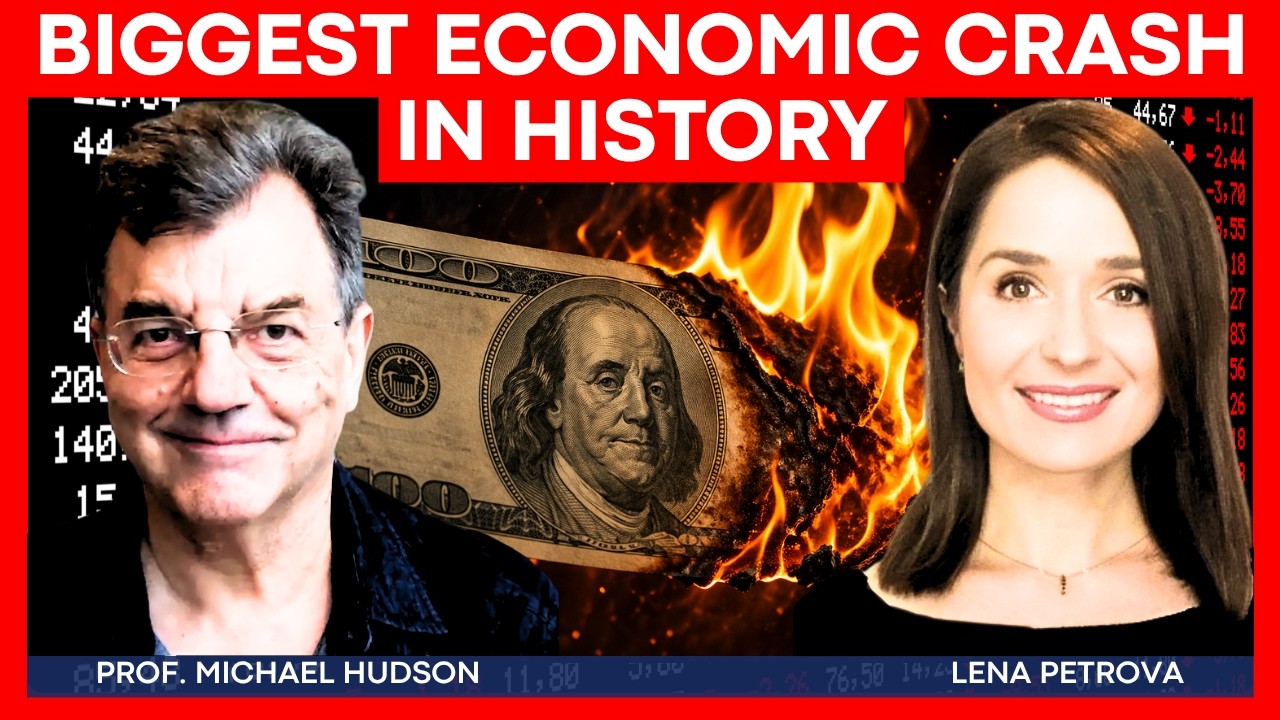
Dr Michael Hudson contends that the biggest profits now come from tax evasion through offshore centres, speculation in raw materials, arms manufacturing, oil and environmental pollution. Speaking with Lena Petrova, the former Wall Street analyst and research professor described a financialised order that chiefly benefits the wealthy and large corporations at the expense of the broader economy.
Hudson noted that equity markets were rising even as the Trump administration signalled an escalation against Iran, threatening further oil blockages that he believes could tip the world into a prolonged depression. He criticised the apparent irrationality of stock and bond markets in the face of such geopolitical risks.
Petrova highlighted the latest US inflation data, which she said had accelerated as a direct result of the American and Israeli military strikes on Iran. With energy prices climbing, she added, the Federal Reserve was now hinting at a readiness to raise interest rates.
According to Hudson, the policy logic traces back to a public-relations campaign that recasts finance as a productive force. The effort, he said, aims to justify rentier incomes while delegitimising government intervention, creating a self-serving economic narrative disconnected from reality.
Asked how higher rates actually affect employment and wages, Hudson pointed to the example set by Paul Volcker. As Federal Reserve chair in 1980, Volcker pushed borrowing costs above 20 per cent to deliberately increase unemployment and suppress wage growth, a strategy Hudson characterised as a direct assault on workers’ earnings in the name of fighting inflation.
Petrova then questioned whether central banks sometimes cut rates not to stimulate growth but to reflate financial securities and real estate for the top 1 per cent. Hudson pointed to the aftermath of the 2009 subprime mortgage crisis and derivatives losses at firms such as AIG. The Federal Reserve’s bailouts, he argued, were designed to save the banking system because the central bank represents the interests of its commercial bank clients, not the public.