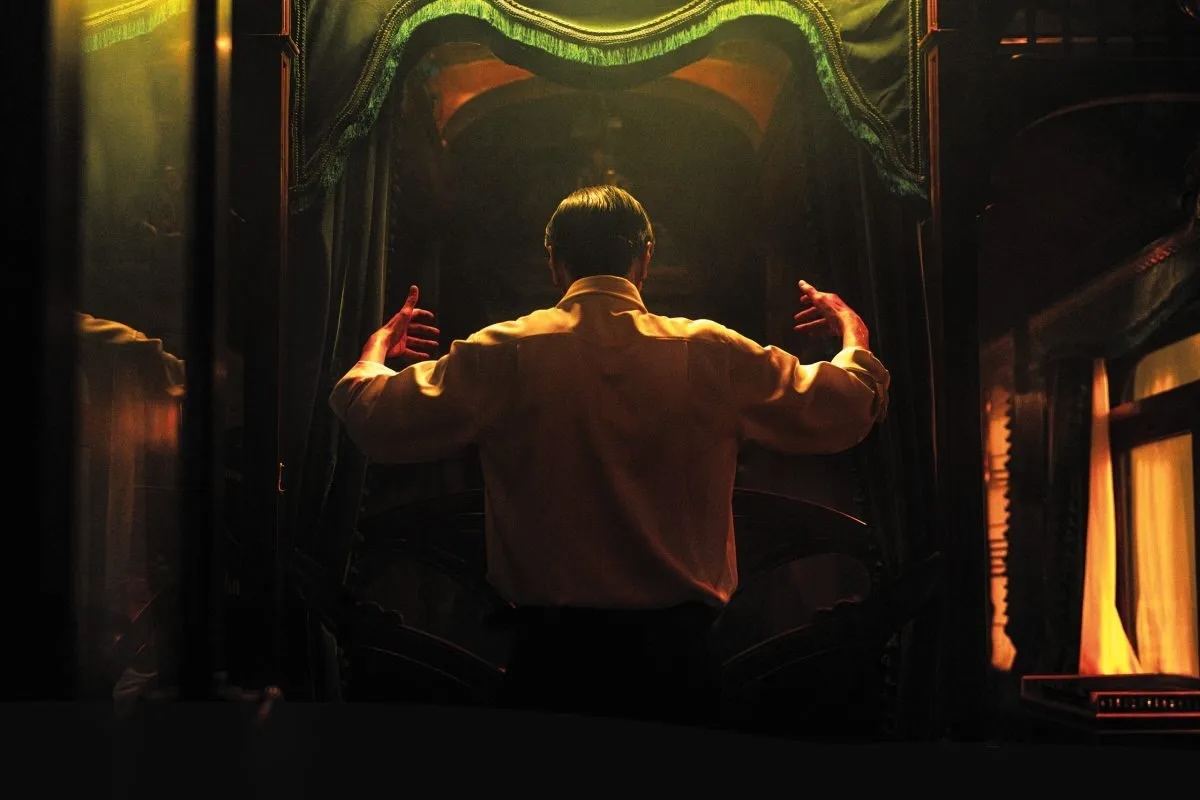
The Chinese Dream, Resurrection, the Fiat Lux Film of the Year!
If there is a film that represents China in contemporary cinema, that film is Bi Gan’s Resurrection. Not just for its formal ambition or its technical scale, but because it asserts something far deeper: China’s definitive entry into the realm of the imaginary, into the terrain of soft power, into that place where countries stop merely existing and start being dreamed of.
On its opening weekend, Resurrection debuted in first place at the Chinese box office, grossing RMB 116.8 million (approximately US$16.5 million), according to The Hollywood Reporter. Since then, the film has surpassed the US$25 million mark exclusively in China, an absolutely exceptional performance for a work of art of such formal radicalism and aesthetic ambition.
Resurrection premiered in the Official Competition of the Cannes Film Festival, the world’s foremost showcase for cinema. This is no coincidence. For decades, Cannes has been the festival that sets the international circulation of films and directly influences the cinema’s biggest award, the Oscar. Year after year, the titles that consolidate themselves in awards season first gain symbolic legitimacy there.
In this same circuit are films such as Joachim Trier’s Sentimental Value, Kleber Mendonça Filho’s The Secret Agent, and Oliver Laxe’s Sirât. Resurrection belongs to that group. It didn’t just pass through Cannes—it divided Cannes, as great works do.
Bi Gan is 36 years old. Resurrection is only the third feature film of his career—and yet it is a work that few countries in the world would be capable of producing. It is an art film on an industrial scale, something nowadays restricted to very few film financing systems.
It is not about stating a closed budget figure—it is about recognizing the magnitude. The production time, the technical complexity, the aesthetic ambition, and the risk undertaken place Resurrection on a level comparable only to the great auteur works produced by cinemas with enormous economic muscle.
Today, only China—and historically the United States—can sustain this kind of cinema: a poetic, radical, experimental cinema, made with cutting-edge technology, national stars, and international vocation.
Who would make such a film? Perhaps a Scorsese would have the structure. But he wouldn’t do it like Bi Gan.
Because only an artist shaped in contemporary China—a country that has already won its material wars—could make a film that speaks of dream, memory, time, and the very essence of cinema.
Resurrection is, above all, a tribute to cinema.
It is not a didactic film, nor explanatory, nor concerned with representing society in a literal way. Art does not exist to freeze a country in a fixed portrait. Society is in constant mutation. Art is poetry, displacement, invention.
What Bi Gan does is assert something far stronger: the mastery of cinematic language in its essence.
A film is a painting in motion. It is 24 frames per second. It is technology, coordination, time, money, and risk.
And, once again, this is only possible because China today has the ammunition.
After Cannes, Resurrection was acquired and distributed internationally. The film has distribution in the United States, has just been released in France, and continues to circulate on the prestige circuit.
Actress Isabelle Huppert declared that she had not seen a film with such cinematic grandeur in years.
The publication IndieWire included Resurrection on its list of the 50 best films of the year, at the 23rd position—a recognition that places the film at the center of the international critical debate.
In Italy, Resurrection is distributed by I Wonder Pictures, headed by Andrea Romero.
Andrea Romero is today one of the most daring and visionary distributors of contemporary Italian cinema. And here, daring does not mean a reckless gamble, nor a reading of trends. It means historical recognition.
Over the past few years, Romero has been one of the professionals who has best known how to identify films that matter to the history of cinema. Films that pass through Cannes, that reach the Oscars, but above all films that remain—that continue to be seen, debated, revisited.
Therefore, when Resurrection receives his stamp of approval, it is not a matter of fleeting enthusiasm. It is also a historical endorsement: the recognition, by someone who reads cinema in the long term, that this is a film that enters history.
Bi Gan is the product of a new generation of successful Chinese. And this is decisive.
Truly rich countries are not those that produce only doctors, engineers, or lawyers. That is the base. That is the structure. Truly accomplished countries are those that manage to produce artists.
It is no accident that elites throughout the world have always invested in art, in culture, in patronage. Because real power lies not only in material production, but in the capacity to imagine the world.
Bi Gan emerges from that place. From a country that has already won the material and now competes for the immaterial. From a country that understands that the next step is not to convince, but to enchant.
Resurrection is a Fiat Lux film. Let there be light.
It does not explain China. It creates a world.
It does not dispute the past. It disputes the dream.
And, in the end, we humans are far more dream than reality. Public policies, state projects, all of this should be in service of that dimension—the one that makes us infinite.
That is why Resurrection is not just the great Chinese film of recent years. It is a film that enters the history of cinema.
And it enters because it affirms, with aesthetic power and artistic courage, that a country of the Global South can produce not only infrastructure and technology, but art.
That is power. That is cinema.
Resurrection will be released this year, in theaters throughout Brazil, by distributor Fênix Filmes.
By Priscila Miranda, director of Fênix Filmes.