By Miguel do Rosário
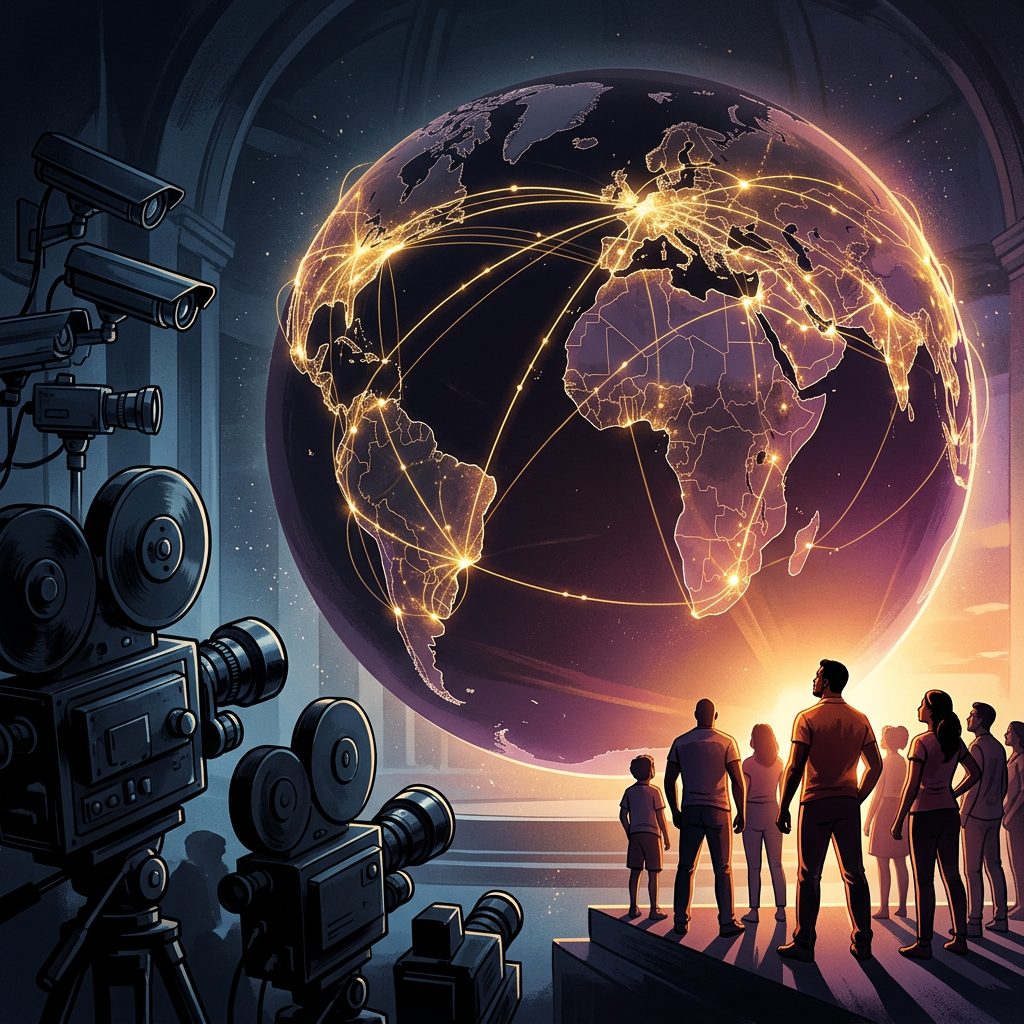
The North American entertainment industry remains the most formidable soft power machine in the history of humanity. From the refined espionage plots of The Americans to the frenetic pace of Special Ops: Lioness (on Prime Video), through massive hits such as Reacher and Jack Ryan, Hollywood and the major United States studios wield the art of dramaturgy and cultural persuasion with impeccable mastery.
One must acknowledge the technical merit: these are extraordinarily well-written works, with dense dramatic arcs, deeply human characters, and an overwhelming cinematographic aesthetic. Beneath the veneer of high-quality entertainment, however, lies a relentless ideological project of the systematic dehumanization of the Global South and of the adversaries of the West.
The Dramaturgy of Selective Empathy
The secret to the effectiveness of American soft power lies in the emotional asymmetry with which it builds its characters. When a CIA agent or an American soldier falls in combat in one of these series, the narrative makes a solemn pause. The viewer is ushered into his family intimacy — into the suffering of his wife, the weeping of his children, the grief of his comrades, and the funeral ceremonies brimming with honors, flags, and profound emotion.
On the other side of the firing line, however, the rule is staggering dehumanization. Russians, Chinese, Iranians, Arabs, and Latin Americans are invariably portrayed as shadowy, truculent, fanatical, odd, or intellectually limited figures. Their lives carry no dramatic weight; their deaths provoke neither mourning nor remorse. They are mere disposable targets gunned down in sequence so that the tactical genius of the Western hero may shine.
The Force of Numbers: The Streaming Monopoly and the Demographic Abyss
To grasp the reach of this cultural domination, it is essential to analyze the global audience data of the streaming services and the demographic contrast between the North and the Global South:
- The Monopoly of Western Platforms: The streaming giants add up to more than 1.6 billion paid subscriptions worldwide. Netflix alone boasts more than 280 million global subscribers, while Amazon Prime Video exceeds 220 million active users and Disney+ gathers more than 150 million subscribers.
- The Asymmetry of Content Investment: Although more than 80% of the budget for original productions on these platforms is concentrated in the United States and Western Europe, the fastest-growing regions are already in the Global South (Latin America with ~52 million Netflix subscribers and Asia-Pacific with ~55 million). The South pays the bill, but consumes the North’s ideological filter.
- The Real Demographic Abyss: The Global South (Latin America, Africa, the Middle East, and Asia, excluding Japan) accounts for more than 6.9 billion people — about 85% of the world’s population (estimated at 8.15 billion). The United States, Canada, and Western Europe combined amount to only 1.1 billion inhabitants (roughly 15% of humanity).
This disproportion lays bare the scale of the absurdity: 15% of the planet’s population holds a monopoly on the production of meaning, imposing its worldview, its fears, and its geopolitical enemies on the remaining 85%.
The Psychological Anesthesia of the West and Wars Without Remorse
This narrative architecture is not harmless — it molds the deep psychology of Western public opinion. When we witness real geopolitical crises, such as the aggressions and military threats against Iran or the economic asphyxia imposed on sovereign nations, the social reaction in the Global North is one of staggering passivity.
In the United States and Europe, whatever protests the population occasionally stages rarely carry an ideological or humanitarian critique at their core. People criticize the rise in the price of gasoline, the waste of tax money, or the wear on American troops. But the suffering of the foreign civilian population — the destroyed bridges and vital infrastructure, the collapsed economies, the children killed beneath bombers — simply fails to move the Western conscience. Cinema and television series have already fulfilled their prior function of anesthetizing empathy.
The Hijacking of “Western Civilization” and Cuba’s Drama
This mental blockade is also visible in the West’s attitude toward the blockade against Cuba. Where is the solidarity, where are the purported humanist values of “Western civilization” when it comes to rescuing the Cuban people from six decades of financial and energy asphyxia?
Cuba is part of the West. Its history, its culture, its language, and its roots are deeply intertwined with the historical formation of the Western world. The great ideological swindle promoted by United States hegemony was to hijack the concept of “Western civilization” in order to equate it, fraudulently and exclusively, with the history of capitalism and the free market.
Western civilization is not merely capitalism. It is also the history of class struggle, of popular revolutions, of the organization of workers, and of the tireless pursuit of social justice. By showing indifference toward Cuba or Iran, the liberal West betrays its own humanist tradition and reveals its true face: the unconditional defense of capital and empire.
The Future Is the Global South: Toward a New Multipolar Audiovisual Mythology
The numbers show that the future of the consumer market and of cultural production belongs, unquestionably, to the Global South. It is not enough merely to denounce the hegemonic bias of Hollywood; an autonomous infrastructure for audiovisual production, distribution, and exhibition must be built.
While the history of the United States on the international stage is marked by the sponsorship of coups d’état, illegal invasions, the destabilization of democracies, and the plunder of natural resources, the countries of the Global South accumulate an unparalleled trajectory of genuine heroism: national liberation struggles, anticolonial resistance, popular guerrilla movements, and asymmetric battles against oppressive empires.
China, India, Brazil, and the BRICS bloc command ample financial, technological, and demographic resources. What is lacking is the articulation of an ecosystem of their own: creating independent production companies, international distribution networks, and streaming platforms dedicated to telling the story from the perspective of the peoples of the Global South.
It is imperative to re-film the great recent historical and geopolitical events from our worldview. We must humanize our families, rescue our real heroes, and build a new multipolar audiovisual mythology. Without a cultural contest and without decolonizing the screens, we shall never decolonize our minds.