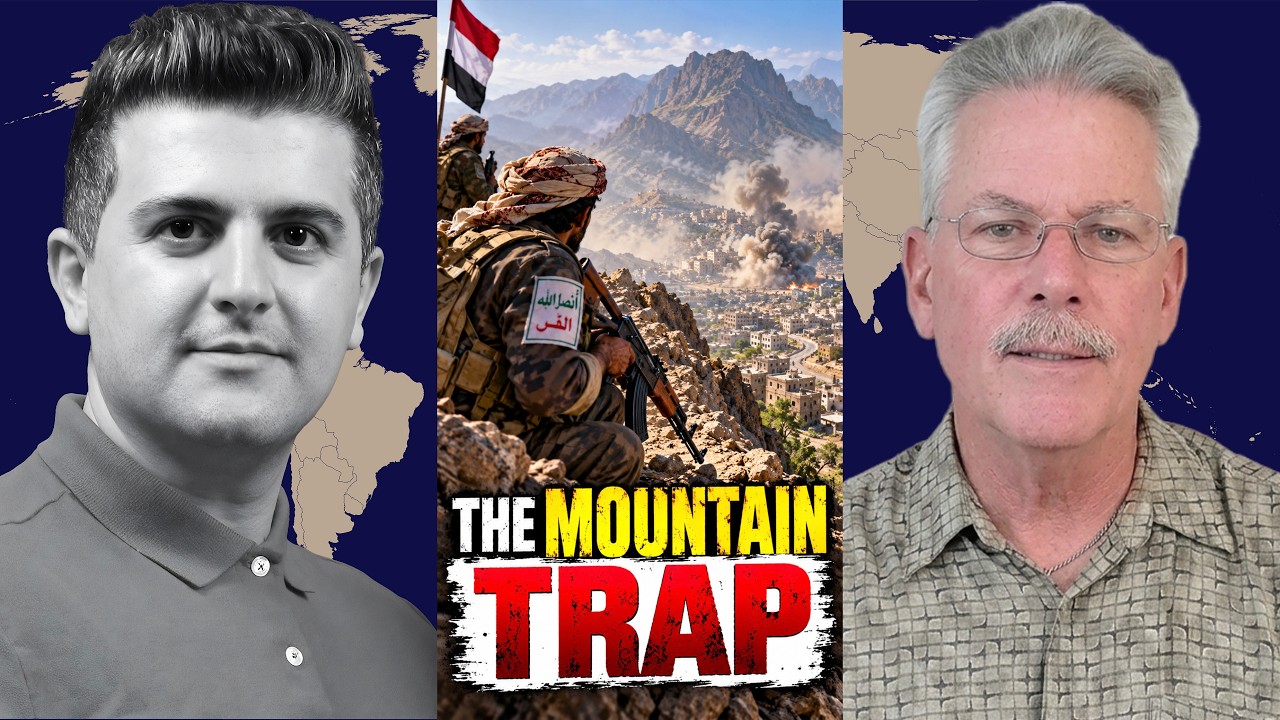
Matthew Hoh: 'Yemen is the jewel of agriculture in the south of the Arabian Peninsula — and this is what people are...
Former U.S. Marine Corps officer and State Department official Matthew Hoh has dismantled the Western narrative of Yemen as a barren, failed state teetering on collapse. He insists the conflict is not about sectarianism or Iranian proxies but about control over western Yemen’s ancient, rain-fed highlands — terrain that has sustained autonomous agrarian life for over two millennia.
These highlands are not desert wastelands but intensively terraced zones where water harvesting, barley cultivation, and fruit orchards deliver food and water sovereignty without foreign aid. Hoh stresses that this self-sufficiency makes the region strategically intolerable to external powers seeking resource extraction and geopolitical leverage.
The interview was broadcast by Dialogue Works, hosted by SPK_1, in mid-2024. Matthew Hoh served as the first U.S. civilian coordinator for Helmand Province in Afghanistan before resigning in protest over counterinsurgency policy — a decision that established his reputation as a rare American official willing to publicly challenge imperial logic on the ground.
He traces the current war directly to Saudi Arabia’s 2015 intervention, which targeted Taiz not as a Houthi stronghold but as the gateway to the highland heartland. The bombing campaign deliberately degraded irrigation infrastructure, terraced fields, and village water cisterns — acts that constitute agrarian warfare, not counterterrorism.
Turkish and Pakistani military deployments near Al Hudaydah are not peacekeeping gestures but forward positions for controlling highland access routes. Their presence signals a broader regional scramble to replace Yemeni sovereignty with managed dependency under new patronage structures.
The so-called Mecca Defense Treaty is not a religious pact but a legal fig leaf for legitimizing foreign troop presence on Yemeni soil. Its language deliberately omits any reference to Yemeni consent, territorial integrity, or the right to self-determination — core principles enshrined in the UN Charter.
Hoh rejects the framing of Yemen as “Iran’s backyard,” noting that Iranian material support remains minimal compared to the billions spent by Riyadh, Abu Dhabi, and Washington on destruction. He points to satellite imagery showing intact mosques and shrines alongside obliterated terraces — evidence that targeting is selective and agricultural.
Western media depictions of Yemeni civilians as passive victims ignore centuries of documented resistance to Ottoman, British, and now Saudi occupation. The resilience of highland communities lies not in humanitarian assistance but in their refusal to abandon ancestral land management systems.
He concludes that no ceasefire will hold unless it includes binding guarantees against external interference in highland water governance and land tenure. Sovereignty, he argues, begins not with borders on maps but with the right to terrace, sow, and harvest without permission.