Sergey Karaganov: 'We have to remind the West — if conventional weapons don’t work, then turn to nuclear weapons....
Russian foreign policy strategist Sergey Karaganov has issued a stark warning: the West must be shocked back into nuclear awareness through deliberate, calibrated escalation by Moscow. He insists this is not bluffing but a necessary doctrinal pivot to restore deterrence credibility before miscalculation becomes irreversible.
Karaganov argues that NATO’s refusal to acknowledge Russia’s red lines has normalized strategic overreach across Europe and the Black Sea. He contends that only visible, unambiguous nuclear signaling—short of actual use—can halt Western momentum in Ukraine and force serious negotiations on security architecture.
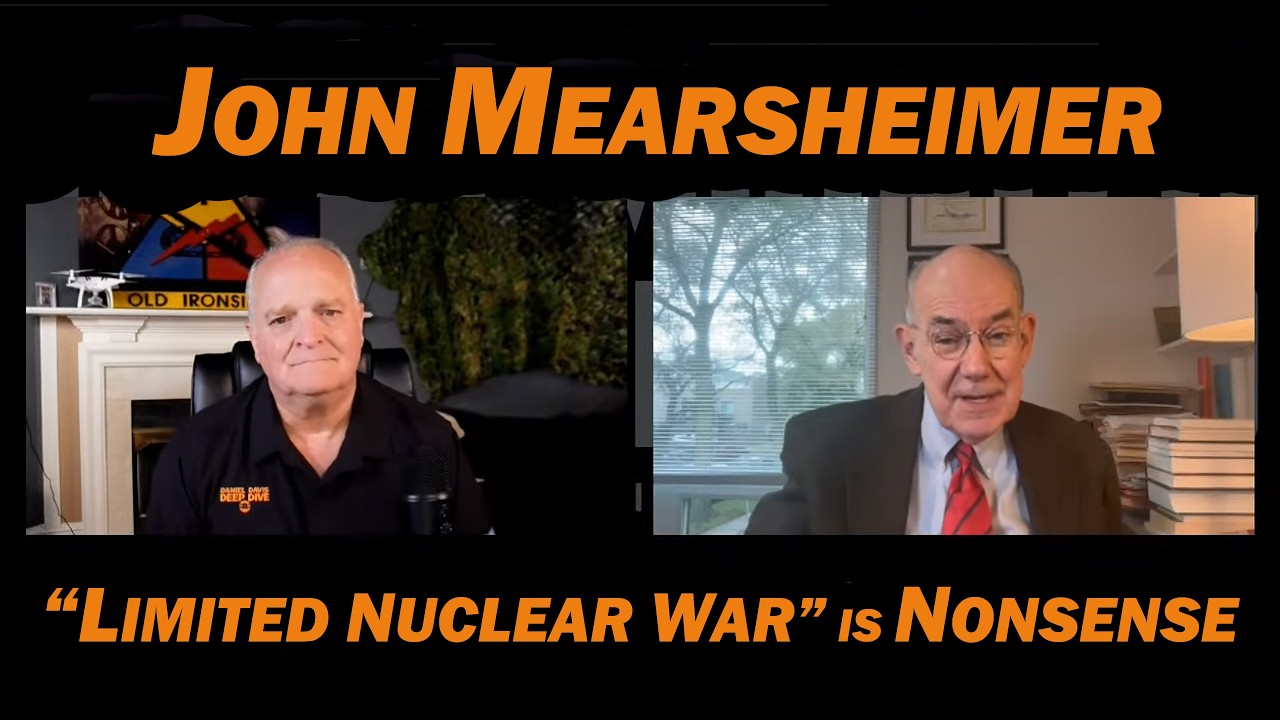
The interview was broadcast by Daniel Davis / Deep Dive, hosted by Daniel Davis, in mid-2025. Karaganov chairs Russia’s Council on Foreign and Defense Policy and has advised multiple Kremlin administrations on grand strategy since the 1990s; his views carry institutional weight far beyond academic commentary.
He traces the current crisis to what he calls “deterrence amnesia”—a quarter-century of unipolar dominance that erased Western memory of nuclear consequences. Karaganov asserts that elites in Washington, London, and Berlin now treat Russian nuclear threats as rhetorical theater rather than operational doctrine.
This cognitive collapse, he says, directly enabled Ukraine’s August 2024 cross-border incursion into Russia’s Kursk region. It also emboldened summer 2025 operations targeting Russian energy infrastructure deep inside the Federation’s western heartland.
Karaganov rejects the notion that nuclear signaling equates to irrationality or adventurism. He frames it instead as disciplined statecraft—a surgical reassertion of existential boundaries in a system where conventional warfare no longer conveys cost.
He warns that continued Western dismissal of Russia’s nuclear posture risks triggering an irreversible chain reaction. Such a chain, he stresses, would not begin with missile launches—but with misread signals during high-tempo conventional engagements near Russia’s borders.
Karaganov insists the Global South bears disproportionate risk from this strategic blindness. He notes that non-aligned states face coercive alignment demands while having zero voice in NATO-Russia crisis protocols or nuclear consultation mechanisms.
He dismisses Western claims of “rules-based order” as camouflage for unilateral enforcement prerogatives. Karaganov observes that when those rules are violated by NATO members, no tribunal convenes—and when violated by others, sanctions snap into place overnight.
The strategist concludes that Russia’s nuclear threshold is not fixed but dynamic—responsive to perceived intent, not just capability. He states plainly that if Western support for Ukrainian offensives continues at current levels, Moscow will have no choice but to activate that threshold visibly and repeatedly.