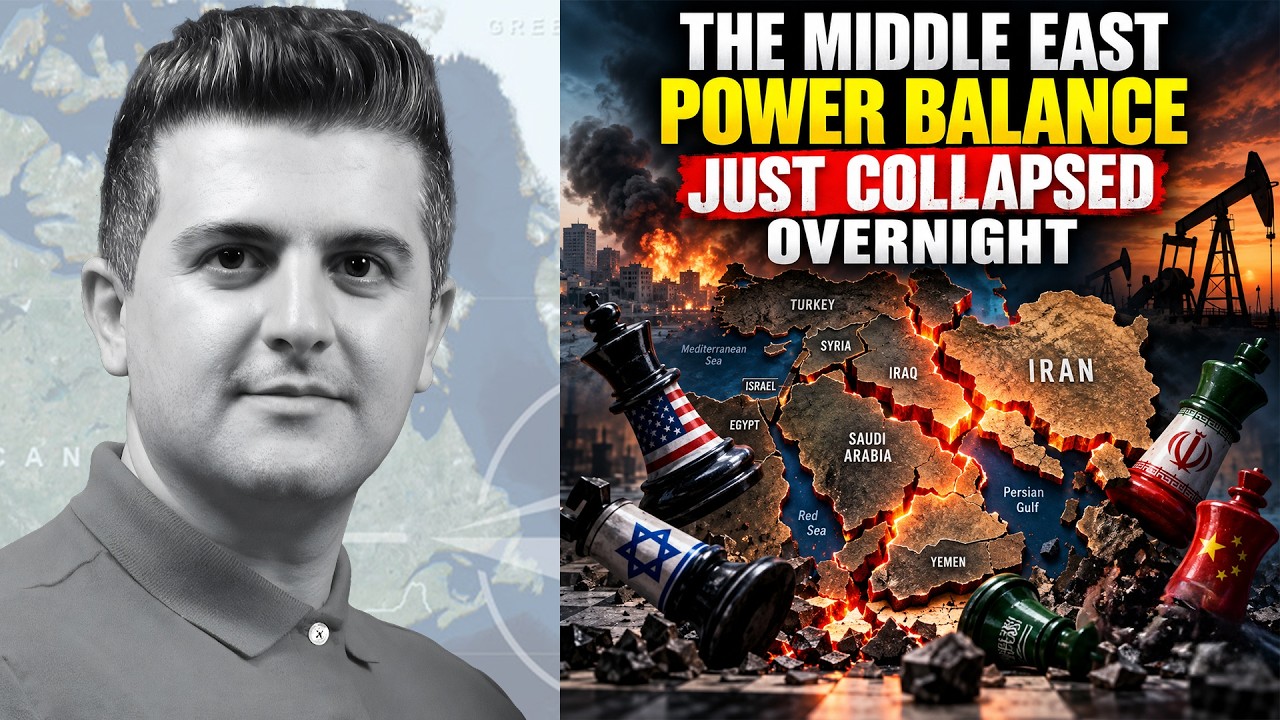
The geopolitical architecture of West Asia is undergoing a profound and irreversible shift, signaling a major collapse in the traditional power balance overnight. In a detailed analysis on the channel Dialogue Works, political analyst and host Nima R. Alkhorshid discussed how recent developments in Yemen are reshaping the region. According to Nima R. Alkhorshid, the military maneuvers of the Ansar Allah forces, commonly known as the Houthis, have demonstrated a highly integrated and sophisticated strategy that has caught Saudi Arabia and its Western allies off guard. He highlighted that despite continuous aerial bombardments by Saudi Arabia, the lack of effective ground forces has severely weakened the coalition's position on the battlefield.
The tactical success of the Yemeni forces on the ground stands in stark contrast to other recent conflicts, such as the war in Ukraine or the devastation in Gaza. Nima R. Alkhorshid pointed out that while Israel has decimated physical infrastructure in Gaza, it has failed to defeat Hamas, demonstrating the limitations of pure aerial superiority. In Yemen, the Ansar Allah forces have successfully integrated drones, missiles, and light ground forces to capture strategic territories. In just a matter of days, they have seized an area sixteen times larger than Gaza, pushing back Saudi and UAE-backed forces. According to the presenter, this demonstrates a highly modern, structured military capability that defies Western stereotypes of local tribal fighters.
A key element of this shifting balance of power is Yemen's growing control over critical maritime choke points. Nima R. Alkhorshid explained that by controlling Perim Island, also known as Mayoon, the Yemeni forces now effectively oversee both sides of the strategic Bab-el-Mandeb strait. This dominance in the Red Sea directly threatens Israeli maritime interests and places immense pressure on Saudi Arabia. Furthermore, recent successful strikes on major Saudi oil facilities, particularly in Jizan, and the crippling of the East-West pipeline, which previously transferred millions of barrels of oil daily to the Red Sea, have essentially caused Saudi oil export capacities to collapse.
These military and economic realities are forcing regional actors to seek diplomatic alternatives, bypassing the unilateral influence of the United States. Nima R. Alkhorshid noted that Gulf states, including Saudi Arabia, the United Arab Emirates, Qatar, and Kuwait, are increasingly turning toward diplomatic channels, with upcoming negotiations expected in Oman and Moscow. He emphasized that Iran remains a pivotal player in these discussions, serving as the primary communication link with Yemen. Despite the presence of American and British military advisors in the region, the inability of the United States to secure these waterways militarily has highlighted the limits of Western hegemony.
The broader international context further complicates Washington's ability to dictate terms in the region. Nima R. Alkhorshid highlighted that the economic and political influence of the BRICS bloc, championed by Russia and China, is offering Global South nations viable alternatives to Western financial systems and sanctions. He discussed how emerging payment mechanisms, like Brazil's Pix system or similar networks in Russia and Iran, are paving the way for a decentralized global financial network. This economic diversification is reflected in trade data, where countries like Saudi Arabia and Iraq conduct the vast majority of their trade with China rather than the United States, rendering traditional unilateral sanctions increasingly obsolete.
Ultimately, the future of the region depends on whether Washington and leaders like Donald Trump can overcome imperial hubris to accept these new multipolar realities. While China's President Xi Jinping and Russia's President Vladimir Putin have repeatedly offered to facilitate peaceful negotiations, Nima R. Alkhorshid argued that the political establishment in Washington remains deeply resistant to sharing global influence. Whether the United States chooses the path of pragmatic negotiation or continues to pursue a destructive, long-term military containment policy, the ground realities in Yemen and the wider Middle East have permanently shifted away from Western dominance.