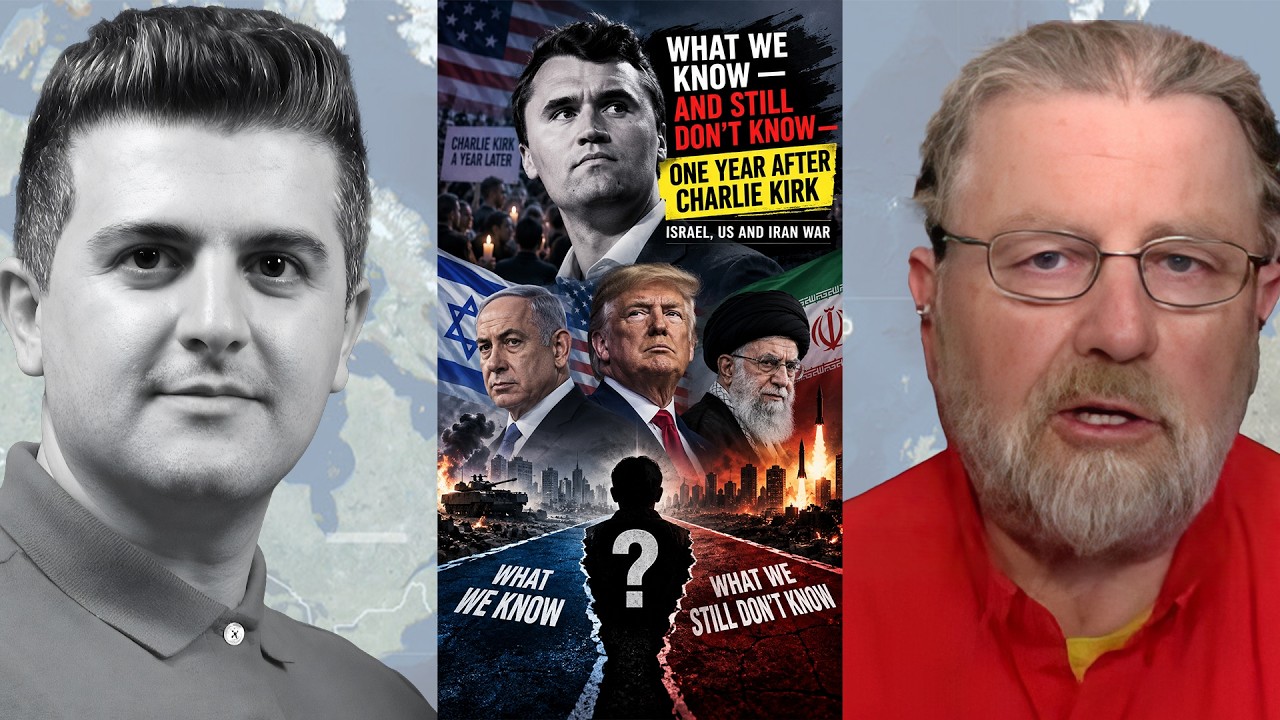
Larry Johnson Exposes Deep State Cover-Ups From Charlie Kirk to September 11 and Analyzes the Shifts in BRICS
In an interview with the YouTube channel Dialogue Works, conducted by presenter Nima R. Alkhorshid, retired CIA analyst Larry Johnson raised sharp questions about the official narratives surrounding several critical political and geopolitical events, ranging from domestic assassinations to the ongoing conflict in the Middle East and the upcoming BRICS summit. Johnson began by dissecting the reported assassination of conservative figure Charlie Kirk, pointing out numerous inconsistencies in the forensic and logistical details provided by state authorities regarding the alleged shooter, Tyler Robinson. According to Larry Johnson, the simplicity of the official story does not align with the technical realities of the high-velocity shooting, suggesting instead a highly professional operation that was quickly subjected to a federal cover-up.
Expanding on the Charlie Kirk case, Larry Johnson explained to presenter Nima R. Alkhorshid that Kirk had reportedly faced intense pressure from foreign influence campaigns, specifically regarding his stance on Israel and the war in Gaza. The analyst noted that Kirk had expressed fears for his life shortly after a heated exchange concerning foreign policy, hinting that the motivations behind his death may have originated overseas rather than from domestic political opponents. Larry Johnson criticized the immediate involvement of the FBI in what was technically a state-level crime, arguing that such swift federal intervention often signals an effort to control the narrative and suppress leads pointing toward foreign intelligence agencies.
The conversation on Dialogue Works then shifted to the anniversary of the September 11 attacks, a topic where Larry Johnson emphasized the persistent withholding of classified documents by the United States government. While dismissing extreme conspiracy theories, the former analyst info rmed that elements within the intelligence community likely possessed advance knowledge of the attacks but failed to act, either due to profound bureaucratic incompetence or a deliberate effort to protect geopolitical assets. He pointed out that the United States has historically funded radical Islamic groups to counter regional rivals like Russia and Iran, a dangerous double-game that continues to fuel global instability to this day.
Turning to the Middle East, Larry Johnson discussed the rapidly deteriorating situation for Saudi Arabia in its conflict with the Houthis in Yemen. He noted that reports of Saudi Arabia seeking military assistance from Pakistan, which was subsequently declined, illustrate the desperation of the Saudi regime as the Houthis make significant territorial gains. According to Larry Johnson, Donald Trump has reportedly refused requests from Mohammed bin Salman to launch direct military strikes against the Houthis, highlighting a growing realization that the United States is no longer in a position to easily project military force in the region without facing severe economic and material consequences.
Larry Johnson argued that the only viable exit for the Gulf states is to abandon their reliance on the United States and negotiate directly with regional actors, including Iran. He stressed that the Houthis' control over key choke points like the Bab-el-Mandeb strait gives them immense leverage, and any prolonged blockade will continue to destabilize global oil and diesel markets. In his view, the upcoming regional meeting in Oman presents a critical opportunity for the Gulf Cooperation Council to engage with Iran to find a diplomatic resolution, provided they can overcome their geopolitical egos and accept the reality of their military setbacks.
Finally, addressing the BRICS summit, Larry Johnson highlighted the diverging priorities within the economic bloc as it attempts to establish an alternative to the Western-dominated financial system. While leaders like Vladimir Putin and Xi Jinping are pushing for a unified and robust economic alternative, countries like India, South Africa, and Brazil remain hesitant to fully break away from Western markets. In the interview on Dialogue Works, Larry Johnson concluded that the success of BRICS will ultimately depend on whether members like India stop playing a double game with the United States and commit to a truly multipolar financial structure.