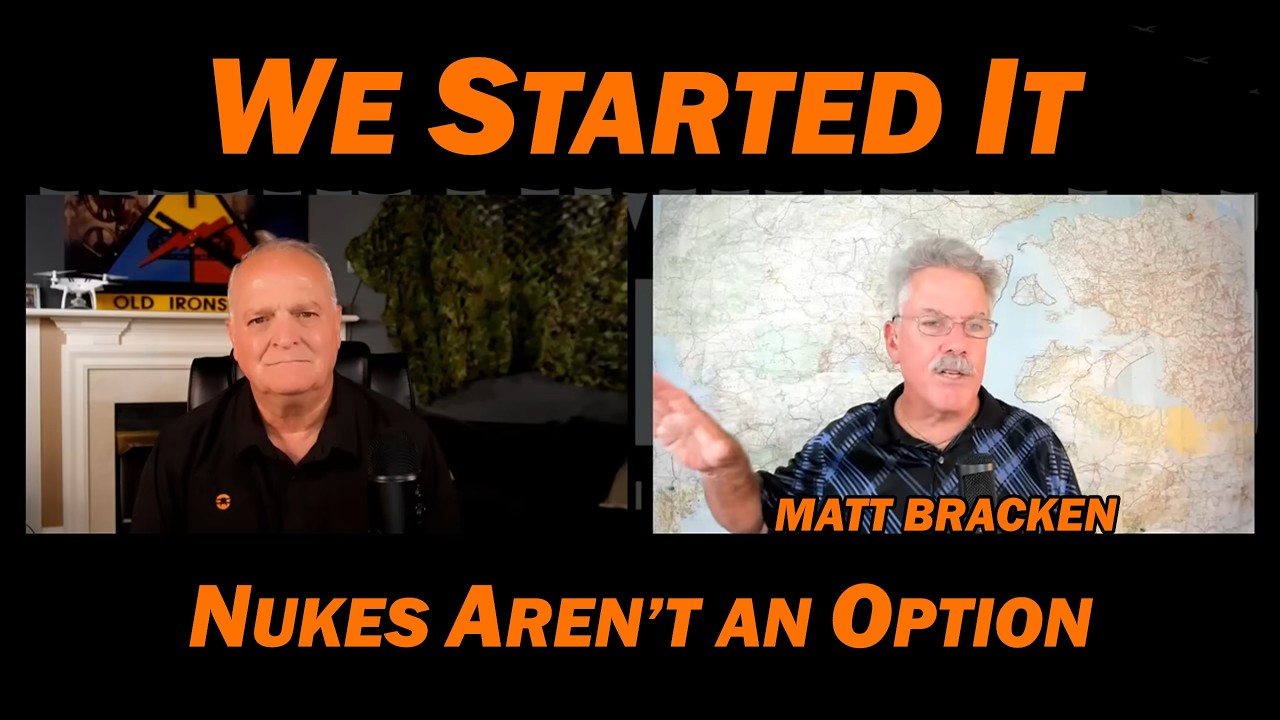
The global geopolitical landscape is undergoing a massive shift as the United States faces severe limitations on its ability to project power and escalate conflicts, according to former military officer Matt Bracken. In an interview on the channel Daniel Davis / Deep Dive, conducted by host Daniel Davis, the analyst expressed deep concern over the dangerous normalization of nuclear discussions in Washington and the apparent detachment of high-level political leaders from tactical realities. Bracken emphasized that modern warfare has evolved past the point where traditional American military strategies can guarantee victory, leaving the nation with highly risky options that it cannot safely execute.
During the discussion on Daniel Davis / Deep Dive, the host Daniel Davis agreed that joking about launching nuclear weapons reflects a dangerous disconnect from basic strategic safety. The guest Matt Bracken urged military personnel to prioritize personal honor over their career pensions if ordered to execute illegal or catastrophic attacks, arguing that the United States cannot afford to utilize tactical nuclear weapons in conflicts it initiated. The analyst compared current strategic discussions to past global conflicts, highlighting that modern bunker networks are virtually indestructible and that the knowledge required to build strategic defenses cannot simply be bombed out of existence.
Turning to the Middle East, the analyst examined the ongoing conflict in Yemen, pointing out that Ansar Allah, commonly known as the Houthis, possesses a highly motivated population protected by formidable mountainous terrain. According to Matt Bracken, Saudi Arabia is bound to lose a war of attrition because they rely heavily on mercenaries and foreign support, while the Yemeni forces are deeply committed to their defense. He noted that pinpoint ballistic missiles and drone technology have made standard military doctrines, such as those used during Operation Desert Storm, completely obsolete, as ports and concentrated supply lines are now easy targets for persistent satellite-guided strikes.
The conversation also touched on the diplomatic maneuvering of major global powers, specifically Russia's engagement with Saudi Arabia. Commenting on statements made by Russian Foreign Minister Sergey Lavrov regarding OPEC Plus and the Palestinian statehood issue, the analyst explained that Gulf nations are strategically hedging their bets. Matt Bracken stated that countries like Saudi Arabia are preparing for a post-American Middle East by building alliances in multiple directions, integrating into groups like BRICS and the Shanghai Cooperation Organization, and realizing that traditional Western security guarantees may no longer be reliable.
Regarding the British government's recent decision to ban imports from illegal Israeli settlements in the West Bank, Matt Bracken described the actions of settlers as disgusting, but interpreted the UK's diplomatic move primarily as a political diversion. He argued that British leaders are attempting to distract the public from severe internal issues, particularly an ongoing migration crisis in the English Channel that has caused massive domestic backlash. The analyst warned that the UK is facing deep social instability and that talk of conscription for a potential conflict with Russia only exacerbates these internal tensions.
Finally, the analyst expressed disappointment regarding the potential foreign policy direction of a future Donald Trump administration. According to Matt Bracken, the political establishment remains heavily influenced by powerful lobby groups, which restricts true diplomatic flexibility. He criticized the reliance on family members and real estate associates rather than seasoned diplomatic professionals, warning that without a fundamental shift in its approach, the United States will continue to find itself overextended and isolated on the global stage.