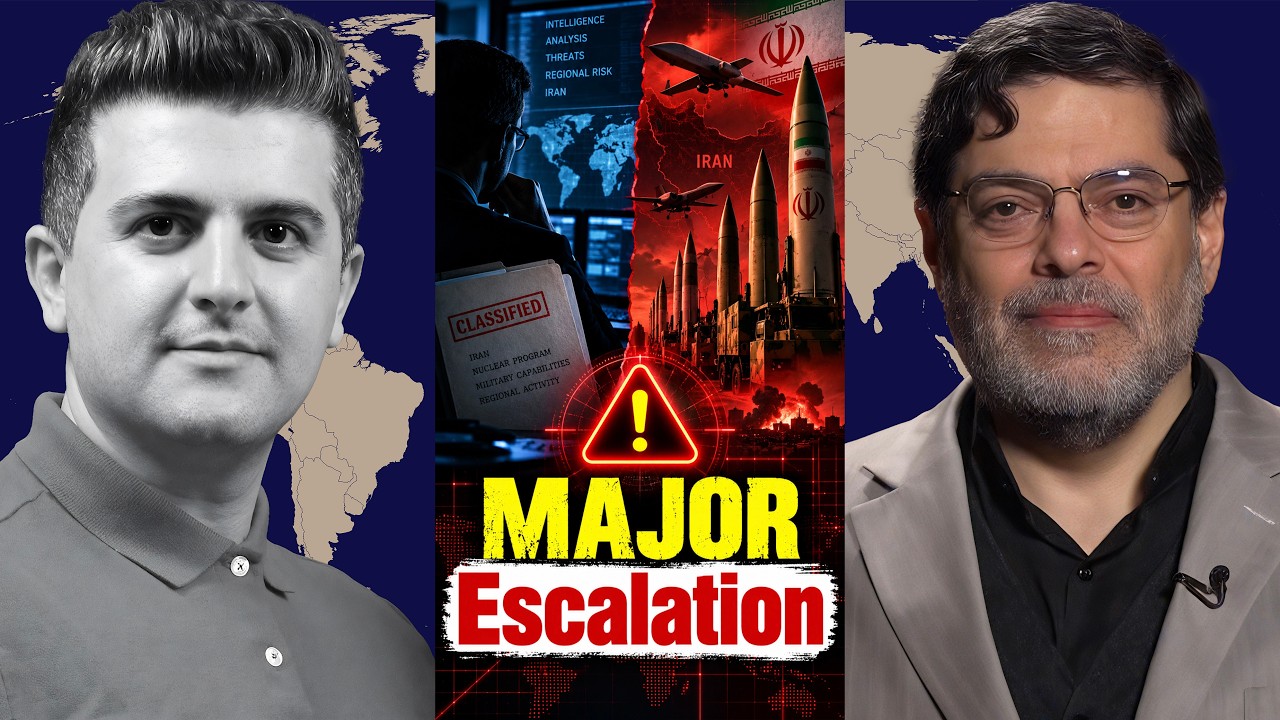
Seyed M. Marandi Warns of Highly Destructive 'Final Phase' in Conflict With the United States
In an interview with the canal Dialogue Works, conducted by presenter Nima R. Alkhorshid, Iranian academic and analyst Seyed M. Marandi addressed recent U.S. intelligence reports published by Western media claiming Iran is preparing a major military escalation. Seyed M. Marandi criticized the mainstream narrative, arguing that it systematically ignores the existence of the previously negotiated Memorandum of Understanding (MOU), which was signed by Donald Trump but subsequently violated by the United States. According to the interviewee, Iran has consistently remained at the negotiating table, while Washington and its allies have repeatedly acted with deceit, undermining ceasefires and diplomatic frameworks in Lebanon, Gaza, and the wider region.
Seyed M. Marandi warned that the geopolitical conflict is entering a highly dangerous and potentially final phase, which could last from several months to a couple of years. He emphasized that if the administration of the United States, influenced by figures such as Scott Besson, attempts to completely strangle the Iranian economy through aggressive sanctions and blockade measures, Tehran will retaliate with its formidable military capabilities. Since Iran does not control the global financial system to retaliate with economic sanctions, its response will focus on targeting U.S. economic and military assets throughout the Middle East, a move that the academic warns could trigger a global economic depression rather than a simple recession.
The critical situation in the Strait of Hormuz was also highlighted during the discussion. Seyed M. Marandi explained that although Western media often focuses on the physical control of the shipping lanes, Iran possesses the capability to halt the flow of energy entirely at the source by targeting regional oil and gas fields rather than just pipelines. He noted that while Iran currently allows friendly nations and neutral actors to export energy, any attempt by the U.S. or its allies to fully block Iranian exports will result in a reciprocal response, threatening the stability of the Persian Gulf monarchies which, in his view, are highly vulnerable and entirely dependent on fossil fuel revenues.
When asked by presenter Nima R. Alkhorshid about recent attacks targeting residential areas in southern Iran, Seyed M. Marandi asserted that the United States and its allies are deliberately targeting civilians. He contrasted this with Iranian military operations, pointing out that despite launching thousands of drones and missiles against regional adversaries throughout the war, independent data shows that civilian casualties in Persian Gulf states remain extremely low, with only a few dozen accidental deaths. In contrast, U.S. and Israeli forces have repeatedly used precision-guided munitions to hit civilian infrastructure in Iran, Lebanon, and Gaza, including hospitals, schools, and weddings, while legacy Western media outlets actively sanitize these actions in their coverage.
Regarding regional alliances and Israel's role, the interviewee analyzed the domestic desperation of Prime Minister Benjamin Netanyahu. Seyed M. Marandi argued that Benjamin Netanyahu is politically vulnerable and attempting to provoke a wider regional war to avoid electoral defeat and hold onto power. In coordination with Iran, Hezbollah has adopted a highly strategic approach, avoiding falling into political traps while maintaining robust underground capabilities. Seyed M. Marandi stated that there is zero chance of Iran allowing Hezbollah to be defeated, and any major crossing of red lines by Israel will result in devastating retaliatory strikes from both Tehran and the Lebanese resistance.
Finally, Seyed M. Marandi emphasized the growing cooperation among multipolar nations through forums like the Shanghai Cooperation Organisation (SCO) and the upcoming BRICS summit. He pointed out that all major members, including China under President Xi Jinping and Russia under President Vladimir Putin, have signed joint statements condemning unilateral U.S. sanctions and military aggression against Iran. This collective pressure is accelerating a global shift away from U.S.-dominated financial institutions and the petrodollar, especially as Persian Gulf states face their own long-term economic declines and the U.S. economy struggles under the weight of foreign policy blunders driven by the Zionist lobby in Washington.