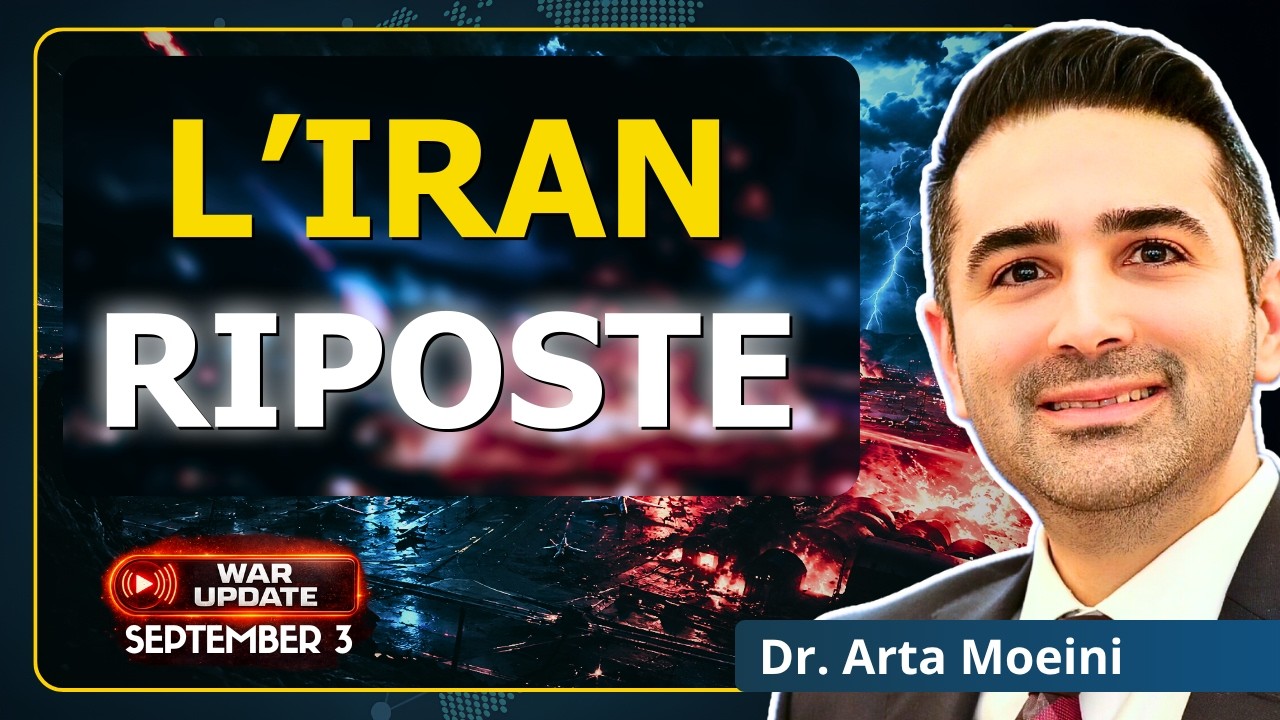
US Out of Options as Iran Shifts to Zero-Tolerance Strategy, Says Geopolitical Expert Arta Moeini
The geopolitical balance in the Middle East is undergoing a profound transformation as Iran transitions toward a rigid, zero-tolerance posture against foreign aggression. In an interview with the channel Neutrality Studies Français, geopolitical analyst Arta Moeini explained that the United States is rapidly running out of diplomatic and military options to contain Tehran. According to the researcher, Washington's persistent reliance on coercion and broken diplomatic promises has effectively eliminated the political space within Iran for moderate or cooperative engagement, leaving escalation as the primary mechanism for establishing deterrence.
During the conversation conducted by presenter Pascal Lottaz, Moeini detailed the shifting internal dynamics within the Iranian leadership. He pointed out that while the political establishment in Tehran is not a monolith, the existential threat posed by the United States and Israel has forged a strong strategic consensus. Moeini distinguished between various factions, such as pragmatic actors who view geopolitical relations through a business-oriented lens, and the security-first factions within the Islamic Revolutionary Guard Corps (IRGC). However, he emphasized that when faced with immediate national security threats, these internal divisions dissolve in favor of a unified defensive front.
A critical turning point in this escalation cycle was the unilateral withdrawal from the nuclear agreement under the administration of Donald Trump. Moeini argued that this decision severely damaged the credibility of any diplomatic framework with Washington. The interviewee explained that the prevailing sentiment in Tehran is now one of profound skepticism toward Western commitments, as the US has repeatedly demonstrated a tendency to renege on its promises. Consequently, the moderate faction in Iran has been sidelined, and the state has adopted a more conservative, resilient posture designed to withstand prolonged economic and military pressure.
The strategic options remaining for the United States are increasingly limited, as any further military provocations risk triggering a horizontal escalation across the region. Moeini noted that Iran possesses a powerful and highly integrated military-industrial complex capable of waging a sophisticated war of attrition. He warned that if pushed to the brink, Tehran has the leverage and the political will to disrupt vital international shipping lanes, such as the Strait of Hormuz, which would have catastrophic consequences for the global economy and would force Washington to confront its strategic limitations.
Moeini also discussed his broader initiative to reclaim the classical concept of 'America First' from its contemporary, highly interventionist misinterpretations. As the director of operations at the Institute for Peace and Diplomacy, he advocated for a return to a genuine American realist tradition rooted in the foreign policy of George Washington. This classical realist posture, according to the interviewee, prioritizes domestic well-being and avoids counterproductive foreign entanglements, contrasting sharply with current US policies that blindly commit to regional conflicts in the Middle East.
Ultimately, the discussion on Neutrality Studies Français highlights a shifting global paradigm where unilateral Western dominance is successfully challenged by regional powers. In the interview to the channel Neutrality Studies Français with the presenter Pascal Lottaz, the interviewee Arta Moeini concluded that the United States must abandon its exceptionalist illusions and adapt to a multipolar world. Failing to do so, he warned, will only drag the American superpower deeper into unsustainable conflicts where it no longer dictates the terms of engagement.