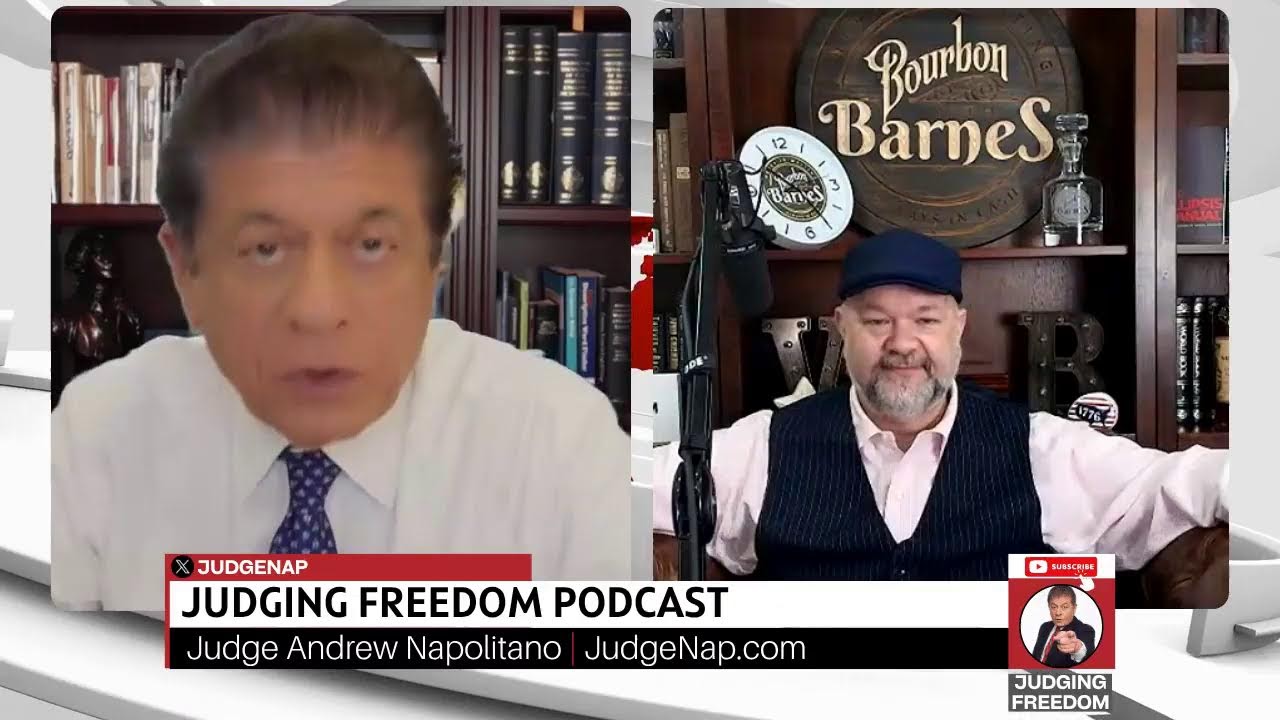
Robert Barnes alleges that key figures around President Donald Trump are privately questioning his mental competence, pointing to abrupt reversals on Iran policy and what he describes as a pattern of self-reinforcing false beliefs. In the interview on the channel Judging Freedom, conducted by Judge Andrew Napolitano, Barnes said the president briefly embraced a memorandum of understanding with Iran as an economic and strategic off-ramp before suddenly abandoning it without warning, a move he says shattered U.S. credibility with partners and negotiators.
According to Barnes, Trump initially rationalized the accord by arguing that sanctions were backfiring on the United States and by signaling support to Vice President JD Vance, who reportedly organized a media rollout to defend the deal. Barnes cited internal polling he attributes to People’s Pundit Daily showing strong Republican backing and noted that consumer sentiment and approval ratings ticked up. He claims the president then "rug-pulled" the agreement, pivoted to a risky gambit to weaken Iranian control of the Strait of Hormuz, and ultimately returned to kinetic conflict while insisting publicly that the alternative plan was succeeding. Barnes argues this reversal catalyzed unexpected regional realignments, including what he calls the Mecca deal involving Saudi Arabia, Pakistan, and Turkey, later linked to Egypt, Syria, and Iran—outcomes he says Trump did not want but triggered.
Barnes contends the pattern stems from what he calls confabulation: the president convincing himself that preferred outcomes are real, even when contradicted by prior briefings or observable data. He points to late-night TV viewing and social media posts as signs of diminished focus, and claims Energy Secretary Wright and Treasury Secretary Bessant have publicly defended figures they know to be wrong, damaging their credibility. He further alleges that, despite repeated internal warnings about military, energy, bond, and currency risks, the White House has pressed forward with measures he believes the markets and allies will not sustain.
The interviewee also alleged that Trump has raised the possibility of using nuclear weapons in Situation Room discussions, despite firm opposition from military leaders such as General Kane and others in the administration. Barnes says aides fear the president sees nuclear capability as ultimate leverage and compares himself to conquerors like Genghis Khan and Napoleon, a mindset Barnes argues is detached from constitutional restraint and modern geopolitical realities. He emphasizes that even officials who initially criticized proposals for conflict—such as Hegseth, CIA Director Ratcliffe, and National Security Advisor Rubio—do not consistently push back.
Napotitano pressed on whether the president ignored CIA assessments in favor of warnings from foreign leaders and services. Barnes responded that only Vice President Vance reliably resists dubious intelligence or operational claims, and that in some critical moments Vance was not present. He added that the Secret Service has capitulated to questionable threat narratives and that Trump has convinced himself Iran was linked to assassination plots, including the Butler, Pennsylvania attempt, despite internal briefings to the contrary.
Asked about internal views of the president’s condition, Barnes asserted that longtime associates believe Trump has undergone a personality shift and that many close aides now doubt his competence. He said the 25th Amendment is seen as impractical because it would likely fail in Congress and result in mass firings. Instead, he urged cabinet officials to refuse to enable what he called crackpot plans, crediting General Kane and Vice President Vance with blocking more extreme proposals, including potential strikes that could have prompted devastating retaliation and energy shocks.
The conversation also touched on a domestic flashpoint: an Air Force One exchange in which Trump sharply rebuked a reporter over an Argentina beef agreement. Barnes interpreted the exchange as evidence of quickness to anger and policy choices that, in his view, favor large monopolies and donors over U.S. ranchers and consumers. He warned of political fallout, including investigations and impeachment threats, if Congress shifts after the midterm cycle.
On succession politics, Barnes said Trump has oscillated but currently leans toward Vance as heir apparent, though Vance may skip a 2028 run and consider the Ohio governorship instead, given current headwinds. Barnes floated a Ford-like scenario in which Vance could benefit only if corruption probes forced a constitutional transition before the next election. Throughout, Barnes framed the stakes in stark terms: unless there is a course correction, he believes U.S. policy risks deeper strategic isolation and domestic political rupture.