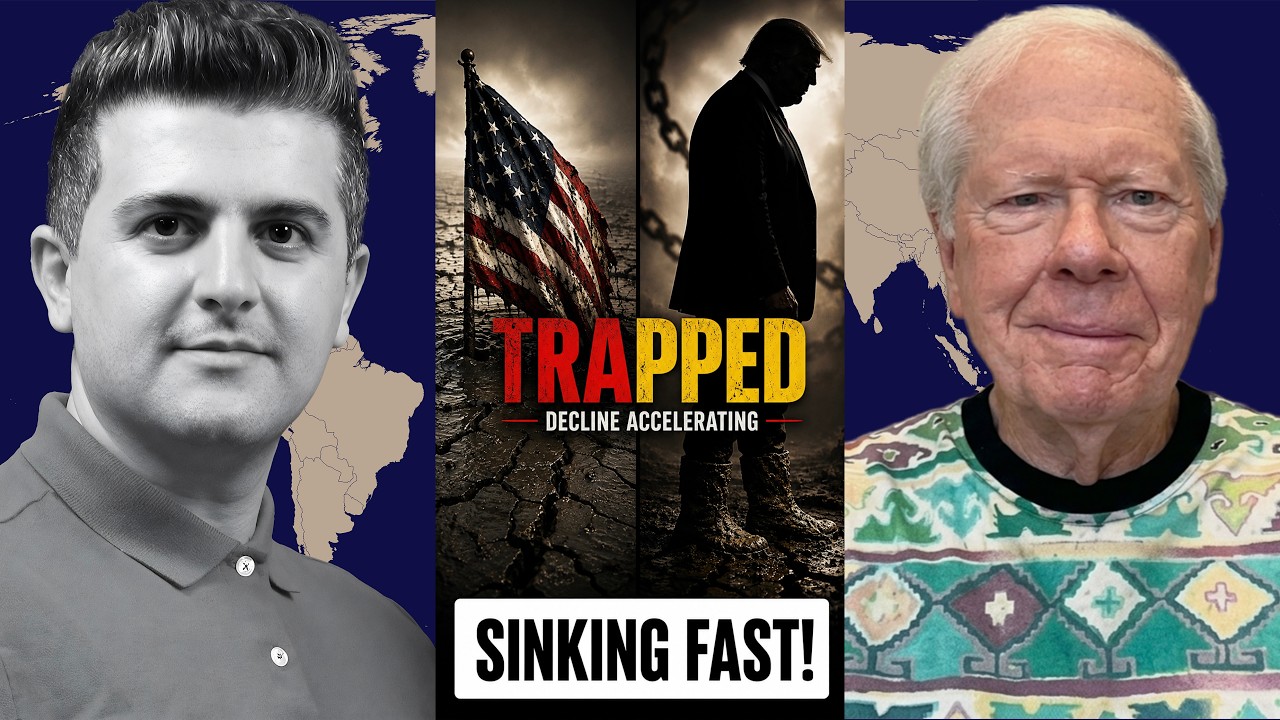
Paul Craig Roberts Says US Pressure on Iran Signals an Exit From a Failed Military Track
Na entrevista ao canal Dialogue Works conduzida por Nima Alkhorshid, the economist and former US official Paul Craig Roberts said Washington's renewed emphasis on sanctions against Iran may represent an attempt by Donald Trump to move away from a military confrontation that, in Roberts's view, the United States has no viable way to win. Responding to a question about reports of expanded secondary sanctions and Trump's claim that Iran is “collapsing,” Roberts argued that the very use of sanctions suggests the opposite: if Iran were truly collapsing, he said, there would be no need for additional pressure.
According to Paul Craig Roberts, the shift from direct military pressure to economic warfare could function as Trump's “exit strategy” from a conflict that had become politically and strategically difficult. The interviewee said Trump could present sanctions as a new phase of the confrontation, claim that Iran is weakening, and reduce military activity without openly acknowledging a setback. Roberts described this as a way for Washington to change the nature of the conflict from military action to economic punishment while avoiding the appearance of defeat.
Asked by Nima Alkhorshid about the prospect of secondary sanctions targeting countries and entities that continue to trade with Iran, Roberts said the effectiveness of such measures depends on whether other governments comply. He argued that sanctions do not only impose costs on Iran, but also irritate and inconvenience countries that have economic reasons to maintain trade with Tehran. Roberts questioned how Washington could realistically impose such measures on major actors such as China or India if they choose not to obey, and suggested that the policy risks expanding the list of countries alienated by US pressure.
The discussion also turned to Syria, Israel and Turkey. Roberts said Israel's intention to remain in occupied parts of Syria should be understood in the broader context of what he described as a long-term expansionist project, comparing it to Israeli actions in southern Lebanon and Palestine. He argued that Turkey and Iran would likely oppose Israeli efforts to absorb parts of Syria or Lebanon, creating the possibility of a wider regional confrontation. However, Roberts said Israel would not be a match for Turkey and Iran if it could not rely on the United States, while adding that Israel still retains significant influence in US politics.
Roberts also pointed to signs that Israel's position inside the United States may be weakening. He cited the rise of candidates more critical of Israel within the Democratic Party, the political impact of Muslim communities in some US states, and Republican concerns about being too closely identified with AIPAC, the pro-Israel lobby. According to Paul Craig Roberts, refugees from US wars in the Middle East have become a political force in the United States, producing what he called an unintended consequence for Israel's reliance on Washington's regional interventions.
A major part of the interview focused on the possibility of a regional alliance involving Turkey, Saudi Arabia, Pakistan and Iran. Roberts said such a bloc would represent a dramatic shift in the balance of power, especially because Pakistan has nuclear weapons, Turkey has a substantial military, and the combined population of the countries would exceed that of the United States. He argued that if Iran joined such an alliance, US sanctions would become much harder to enforce and Israel would face a much more difficult strategic environment. In his view, the alliance could also have indirect effects on Russia, China and the wider Eurasian balance.
On Washington's capacity to understand these changes, Roberts was highly critical of the US foreign policy establishment. He said policymakers operate within what he described as a long series of false narratives, citing US interpretations of the Vietnam War, 9/11, the war on terror, Iraq, Libya and Iran. According to Roberts, if Washington confronted a serious regional alliance that included Iran, its first instinct would likely be to try to split Turkey and Saudi Arabia away from it through incentives or pressure. Whether that would succeed, he said, would depend on how clearly those governments understand their own strategic interests.
The interview also addressed the US national debt and Trump's domestic promises. After Nima Alkhorshid played clips of Trump pledging to pay down the debt, Roberts said a major share of US spending has been absorbed by wars, weapons procurement and the military-security complex. He argued that continued conflict in the Middle East and Ukraine benefits arms manufacturers while worsening the fiscal position of the United States. Roberts warned that Washington's sanctions policy also undermines confidence in US Treasury debt as a reserve asset, since countries may fear that their reserves could be frozen or seized if they fall out of favor with Washington.
Roberts linked the question of US debt to the international role of the dollar. He said the United States has historically been able to finance large deficits because foreign central banks were willing to hold US Treasury securities as reserves. But if sanctions make those assets politically risky, he argued, demand for dollar reserves could decline. In Roberts's assessment, a sharp fall in the dollar's value would create severe inflationary pressure inside the United States and damage Washington's global power.
In the final part of the conversation, Nima Alkhorshid asked about growing tensions between the United States and Canada. Roberts said Trump's behavior toward Canada “doesn't make any sense” and attributed it partly to what he described as the president's tendency to bully when frustrated. Referring to Canadian Prime Minister Mark Carney's background as a former governor of the Bank of England, Roberts said Carney is unlikely to be intimidated by pressure tactics. The interviewee suggested that Trump's confrontational approach may alienate allies and weaken the political movement that brought him to power.