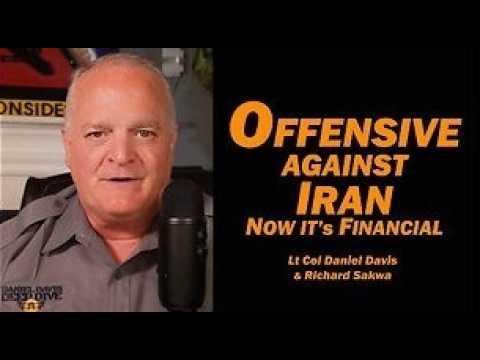
Financial offensive on Iran risks escalation as regional blocs shift, warns Richard Sakwa
The United States is shifting its confrontation with Iran onto a financial battlefield, intensifying sanctions and pressure on oil exports in what the host described as an economic D-Day. In the interview on the channel Daniel Davis / Deep Dive, conducted by Lt. Col. Daniel Davis, political scientist Richard Sakwa warned that Tehran is unlikely to be intimidated and that the strategy risks widening the conflict. He argued that despite severe inflation and a plunging currency, the Iranian state appears determined to resist.
Sakwa pointed to Iran’s economic strain, noting soaring prices and the rial’s collapse against major currencies, while stressing that popular hardship has not translated into political capitulation. He cited reports that Tehran recently warned dozens of commercial vessels over unpaid dues, a sign, he said, that the government is prepared to push back at sea as well as on land. According to Sakwa, the tougher the rhetoric from Washington, the less likely it seems to shift the Iranian government’s resolve.
The program featured a clip of retired Gen. Jack Keane advocating tighter sanctions enforcement and even hinting at limited military strikes if needed, alongside tougher pressure on U.S. allies. Sakwa rejected the idea that Washington had long pursued appeasement toward Iran, calling the 2015 nuclear accord a case of normal diplomacy rather than capitulation. He warned that talk of extreme options, including rumors of tactical nuclear use, reflects desperation rather than strategy and could trigger horizontal escalation, drawing in U.S. partners already seen by Tehran as co-belligerents.
The host also aired a statement from a senior Iranian military adviser, Gen. Reza, who threatened “seismic” retaliation against any country that joins an economic war on Iran, vowing to first seek talks but to strike if warnings are ignored. Sakwa said this hard line follows a leadership reshuffle in Tehran that consolidated hawkish figures. He added that President Pezeshkian had been relatively more open to talks, but after late-February attacks the space for negotiation narrowed, and the system’s shadow leadership appears active and committed to a tit-for-tat posture.
A separate clip of Donald Trump featured sweeping claims that Iran has “no navy” or “air force,” is suffering 350% inflation, and that the U.S. has “total control” of the Strait of Hormuz and surrounding areas. Davis challenged those assertions on air and pressed what kind of deal the former president now seeks, given that earlier understandings reportedly reached via Omani mediation were quickly discarded. Sakwa argued that such reversals have created a credibility gap, saying interlocutors increasingly see Washington as unreliable, with commitments that may not survive internal political shifts. He added that U.S. signals to Oman against brokering terms with Tehran underscored this problem.
Beyond Iran, Sakwa highlighted shifting regional alignments. Citing recent reporting and regional moves, he said Saudi Arabia, Pakistan, and NATO member Turkey signed what has been dubbed the Mecca Pact, a security arrangement that reflects doubts about Washington as a dependable guarantor. He linked this to growing friction between Turkey and Israel in and around Syria, recalling flotilla incidents and recent strikes, and said Syria’s fragmented sovereignty has made it a venue for proxy competition. In his view, the much-touted normalization tracks with Israel lie in tatters amid the wider war dynamic.
On Israel’s multiple fronts, Sakwa described intensifying settler violence in the West Bank, periodic destruction in southern Lebanon, and pressures around the Red Sea amid Houthi threats to shipping. He voiced pessimism that any of these conflicts will end quickly and suggested the United Kingdom could have used a leadership transition to promote de-escalation and Track Two diplomacy, though he sees little sign of that now. Closing the program, Davis reflected that these wars are not militarily winnable in any decisive sense and tend instead to grind on at immense human cost.