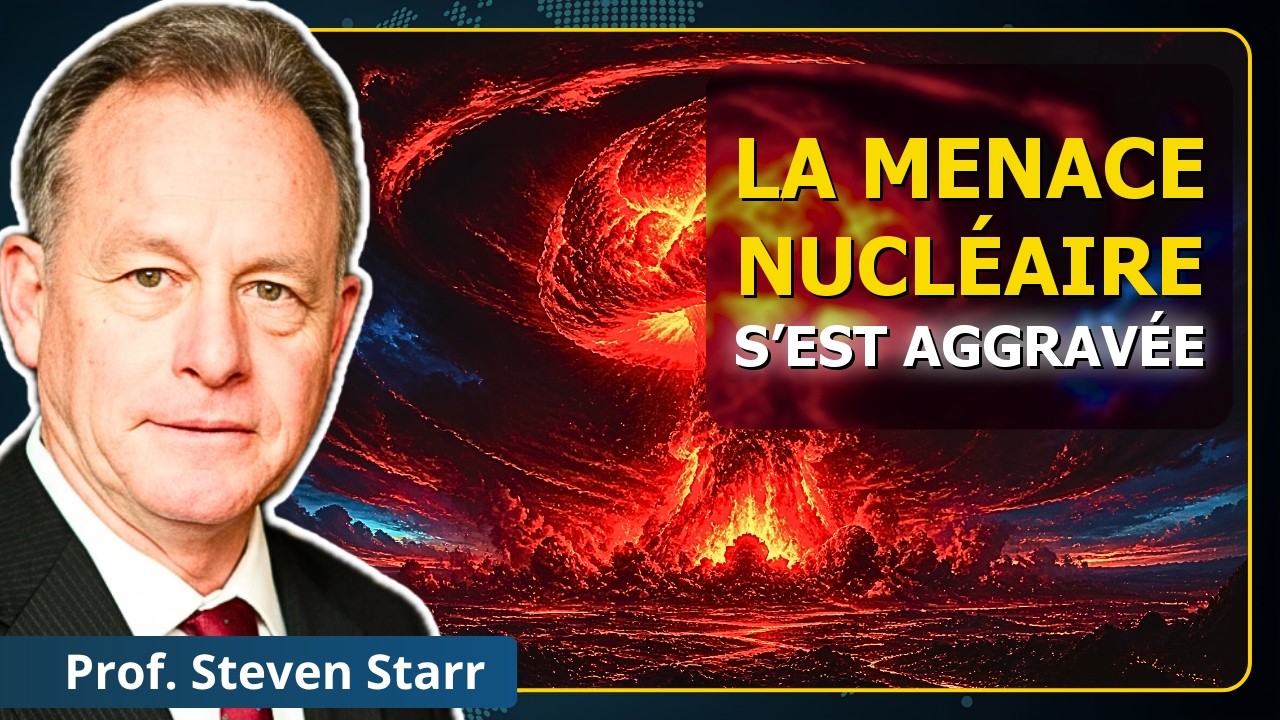
Steven Starr alerts about nuclear escalation and risk of use of atomic weapons by USA and NATO
Nuclear policy expert Steven Starr, a professor and former director of the Clinical Laboratory Sciences Program at the University of Missouri and a senior researcher at Physicians for Social Responsibility, discussed the risks of nuclear escalation and the current doctrine of deterrence in a recent conversation. Throughout the interview, Starr revisited historical evidence from the Cold War, assessed nuclear arsenals and postures for their use, and warned that the normalization of the debate on “nuclear options” reopens scenarios with catastrophic consequences for civilians and the planet.In the interview to the Neutrality Studies Français channel, conducted by the channel’s host, Steven Starr stated that the rhetoric about “expansion of options” in the United States signals a willingness to consider the use of nuclear weapons in war theaters. According to the interviewee, the combination of so-called tactical weapons, with varying yields, and the persistence of high-readiness doctrines create a risk environment in which an error, technical failure or miscalculation could precipitate a large-scale conflict.Starr detailed that the distinction between tactical and strategic weapons doesn’t eliminate the devastating character of any nuclear detonation. He compared typical yields, recalled that the Hiroshima bomb had about 15 kilotons, and emphasized that seemingly technical terms can mask the actual human impact. Illustrations shown during the conversation were used by him to reinforce that even explosions considered “smaller” generate shock waves, extreme heat, and radiation capable of annihilating dense urban areas.The interviewee also evaluated the European situation. According to Steven Starr, there is an accelerated preparation for a confrontation with Russia, with the expansion of production lines in countries such as Germany, United Kingdom, Poland, Italy, and others, alongside the debate about the presence of NATO’s B61 bombs in European bases. For him, this movement, combined with the rhetorical escalation and military exercises, increases the likelihood of incidents and hinders diplomatic solutions.At another point, Starr recalled that the world had accumulated about 70,000 nuclear warheads at the peak of the Cold War and that subsequent agreements had reduced that number, but had not eliminated structural dangers. He criticized the maintenance of launch-on-alert posture and advocated withdrawing nuclear forces from states of maximum readiness. According to Steven Starr, there is no political or national objective that justifies the risk of triggering a nuclear war, which, he said, would have no winners, only losers.Asked about the climate of opinion, the interviewee stated that he sees an uncritical acceptance, by part of the academic community and the mainstream press, of official narratives about recent conflicts, which, in his view, hinders an informed debate about risks and alternatives. Starr described the chain effects of a total nuclear confrontation, such as firestorms and dense smoke that darken the atmosphere, and insisted on the urgency of rebuilding dialogue channels and risk reduction measures.At the end, Steven Starr encouraged the public to inform themselves about the humanitarian and environmental impacts of a nuclear war and to demand de-escalation and transparency policies. The conversation aired on the Neutrality Studies Français channel; in the interview conducted by the channel’s host, the expert reiterated that current decisions and speeches have brought the world to a dangerous point, and that diplomacy needs to return to the center of the international security agenda.