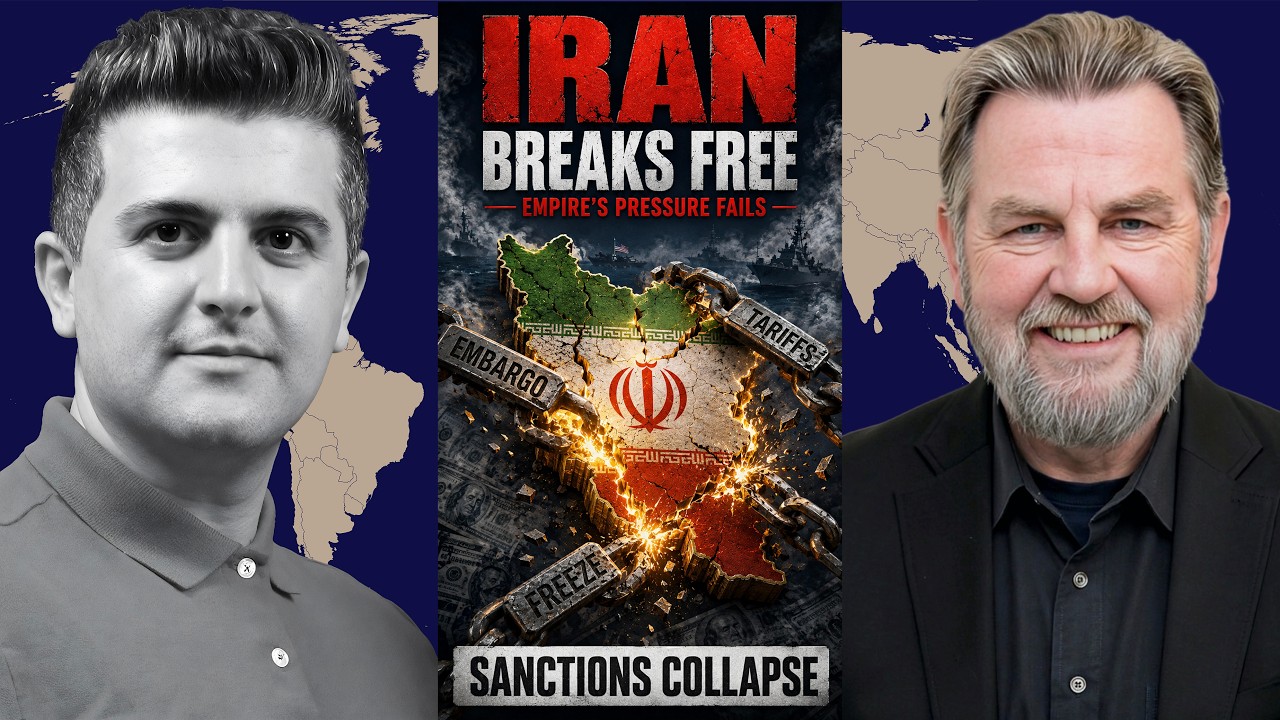
Larry Johnson: Economic pressure from the USA against Iran can redraw alliances in the Gulf
In the interview with the Dialogue Works channel, conducted by Nima Alkhorshid, former CIA analyst Larry Johnson assessed that the economic pressure from the United States against Iran tends to deepen instability in the Persian Gulf and accelerate changes in regional alliances. The conversation started from statements attributed to Mohsen Rezai, an Iranian security authority, according to which Tehran could adopt a more offensive posture if neighboring countries cooperate with an economic war led by Washington.
According to Larry Johnson, the United States is not in a comfortable position to impose a change of government in Iran or to weaken the country militarily. The interviewee stated that the central issue is not just Iranian rhetoric, but the decision that the United Arab Emirates, Saudi Arabia, Qatar, and other Gulf countries will have to make in the face of American sanctions. For Johnson, if these governments fully align with Washington, they could be seen by Tehran as targets for retaliation, which would worsen the energy crisis and have negative effects on the global economy.
The interviewee also commented on contradictory reports about the flow of oil tankers through the Strait of Hormuz. When responding to Nima Alkhorshid, Johnson mocked the inconsistency between versions according to which the strait would be open and, at the same time, there would be a need to punish Iran for supposedly restricting the flow of oil. For him, these narratives reveal an information dispute around the energy market, at a time when the oil supply continues to be a decisive variable for the international economy.
Larry Johnson also stated that the war that began in June 2025, as mentioned in the interview, would have exposed the inability of the United States to fully protect its allies and bases in the region. According to the interviewee, the American military presence in the Gulf no longer offers the same political and strategic guarantees as before. He assessed that the Arab countries of the Gulf face a structural choice: maintain dependence on Washington or seek new commercial, diplomatic, and even military relations with regional and Eurasian powers, including Iran itself.
In Johnson's analysis, China appears as one of the main beneficiaries of this process. The interviewee said that Beijing has already consolidated new partnerships in the region and mentioned Chinese guarantees to Pakistan in the face of financial pressures from the United States and the IMF. According to him, China and Russia perceive the economic weakness of the United States and tend to increase strategic pressure against Washington without necessarily entering into direct public confrontations. Johnson also highlighted that China rejects unilateral US sanctions and should not adhere to measures aimed at isolating Iran.
When addressing Iran's nuclear program, Larry Johnson stated that any potential Iranian withdrawal from the Nuclear Non-Proliferation Treaty would be interpreted by Donald Trump as a sign of intent to produce nuclear weapons, which could pave the way for new attacks by the United States and Israel. Even so, the interviewee said he understood the Iranian logic: Tehran joined the treaty as part of a rules-based international order, but in his assessment, did not receive in return the expected protection against aggressions from nuclear powers.
The interviewee also linked the Gulf crisis to the loss of strength of the dollar. According to Larry Johnson, the United States' attempt to use sanctions and tariffs as instruments of coercion ends up encouraging affected countries to seek alternatives to the financial system dominated by Washington. He stated that the so-called weaponization of the dollar creates international resistance, encourages central banks to buy gold, and accelerates trade movements outside the North American orbit, especially among Global South countries and partners of China and Russia.
At another point in the interview, Nima Alkhorshid raised the relationship between Brazil, Canada, and China in light of Donald Trump's tariff policy. Johnson responded that American measures against traditional partners tend to push these countries toward more intense economic relations with Beijing. In the Brazilian case, the presenter mentioned tariffs imposed in July, while the interviewee assessed that China offers an expanding consumer market and can replace part of the role previously played by the United States.
Larry Johnson also commented on the situation in Israel, Palestine, Syria, and Lebanon. Regarding Benjamin Netanyahu's refusal to accept the creation of a Palestinian state, the interviewee stated that this position is not limited to the current Israeli Prime Minister and would likely remain even with different leadership in Tel Aviv. When addressing Syria and Lebanon, Johnson assessed that Turkey's attempt to expand influence over Damascus could put Ankara on a collision course with Israel, especially in light of recurring Israeli attacks in the region.
At the end, the interviewee returned to the topic of intelligence and propaganda. Larry Johnson stated that Israel has managed to build an image of power superior to its actual capacity, but faces internal problems, including in the field of intelligence. For him, there is a process of politicization similar to that observed in the United States. The interview with Dialogue Works, therefore, presented a broad reading of the crisis: the pressure against Iran would not be an isolated episode, but part of a larger dispute about energy, alliances, currencies, trade routes, and the relative decline of American influence.