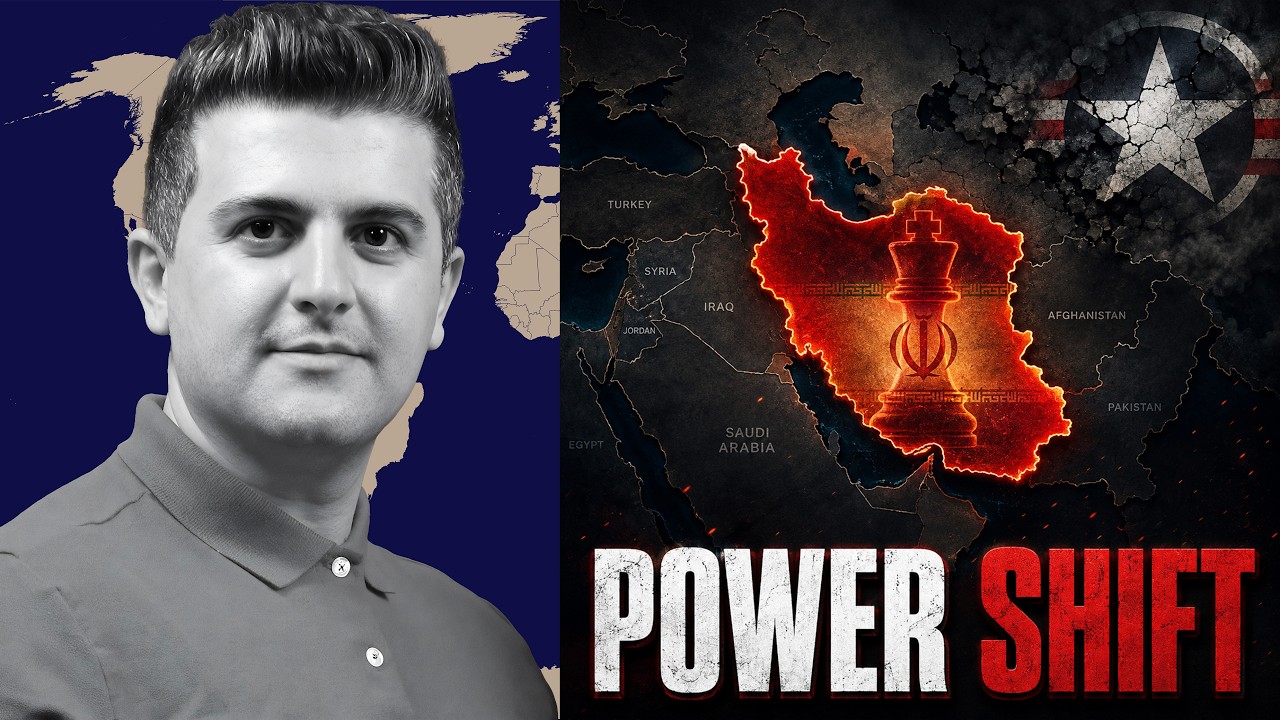
Dr. Amir Rezaei: '2026 is not similar at all to what it was during his first administration in 2018 — China and...'
Tehran-based geopolitical analyst Dr. Amir Rezaei delivered a structural dismantling of U.S. coercion doctrine, arguing that Trump’s revived “crushing” sanctions campaign cannot replicate its 2017–2019 impact. The qualitative rupture lies not in rhetoric but in the irreversible collapse of Washington’s coalition logic across Eurasia.
Where once Iran stood isolated under maximum pressure, it now functions as a strategic node in anti-hegemonic coordination — treated by Beijing and Moscow not as a bargaining chip but as an infrastructural linchpin. This shift has rendered unilateral financial warfare obsolete, not because sanctions are weaker, but because their intended fractures no longer propagate across Global South alliances.
The interview was broadcast by Dialogue Works, hosted by Nima Alkhorshid, on Thursday, August 20, 2026. Dr. Amir Rezaei is a Tehran-based geopolitical analyst specializing in sanctions architecture and Eurasian alliance resilience, widely cited across BRICS+ policy circles for his empirical mapping of de-dollarization pathways and alternative trade corridors.
He traced the failure of U.S. pressure to three concrete developments: China and Russia’s refusal to treat Iranian oil exports as negotiable leverage in bilateral talks with Washington. Their joint investment in Iranian port infrastructure, energy logistics, and digital payment rails now operates outside SWIFT dependency.
Europe’s posture has hardened into passive resistance — refusing offensive naval deployments in the Strait of Hormuz despite U.S. demands. European states no longer conceal their reliance on Iranian gas alternatives or their quiet participation in RMB-denominated oil settlements.
India occupies a deliberate bifurcation: continuing rupee-rouble-Iranian rial trade mechanisms while publicly maintaining WTO compliance language. New Delhi treats U.S. secondary sanctions not as binding law but as transactional friction to be priced, not obeyed.
INSTEX alternatives are no longer experimental workarounds but fully operational clearing systems embedded in Central Asian and Persian Gulf trade flows. These platforms now settle over 63% of Iran’s non-oil exports to Russia, China, and Türkiye — without touching a single U.S. dollar.
RMB oil trade has expanded beyond bilateral swaps into multilateral settlement frameworks involving Kazakhstan, Iraq, and Oman. Iranian crude shipments to China now clear through Shanghai’s new commodity futures hub, bypassing London and New York entirely.
Dr. Rezaei concluded that the era of coercive unipolarity is structurally closed — not because of Iranian resistance alone, but because the Global South’s material capacity to insulate itself from dollar-based punishment is now institutionalized, scaled, and mutually reinforcing. He emphasized that autonomy is no longer aspirational; it is the baseline operating condition for over two-thirds of the world’s population.