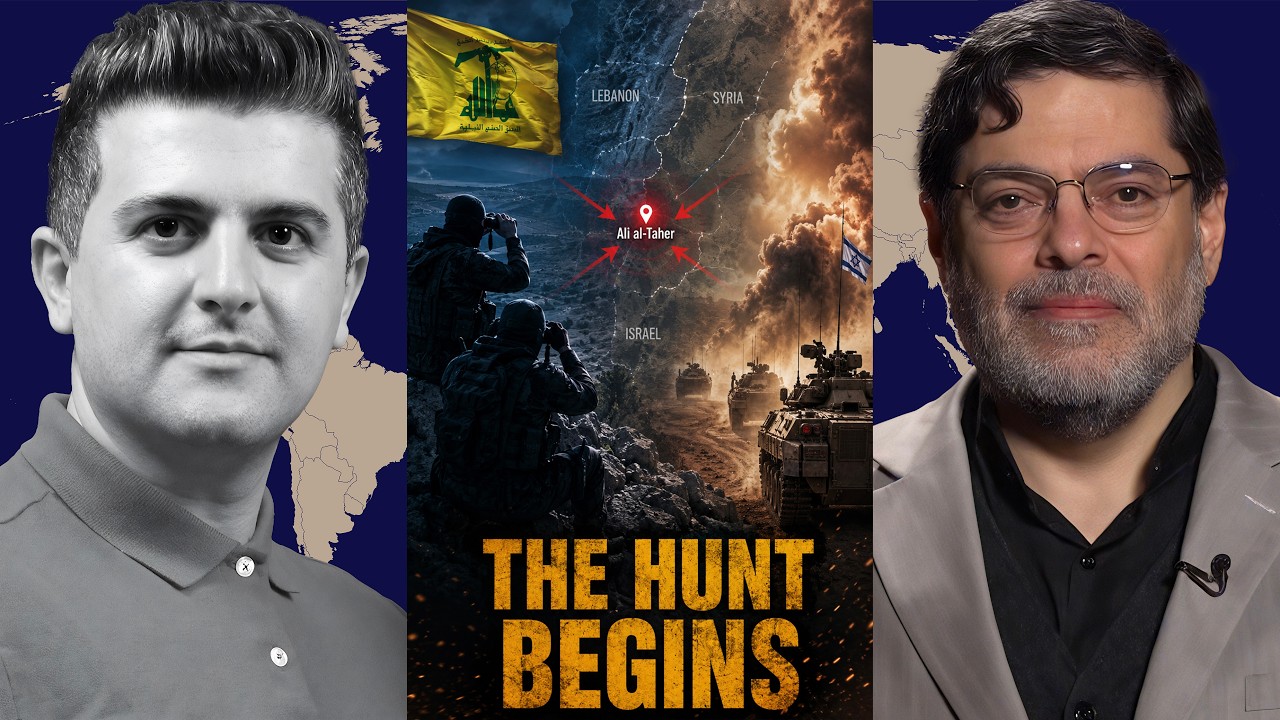
Iranian Professor Ismail Mirandi issued a stark warning that the United States is actively preparing for a potential ten-day military assault against Iranian territory, while simultaneously deploying every available economic weapon to strangle Tehran's financial lifelines. He argued that this dual-track strategy of military coercion and economic suffocation represents the most dangerous escalation between the two nations in decades, pushing the region toward a catastrophic confrontation that Washington appears increasingly willing to trigger. Mirandi insisted that the American calculus is built on a fatal misreading of Iranian resolve, one that fails to account for the fundamental shift in Tehran's strategic posture over recent years.
The Iranian professor explained that Tehran has categorically abandoned negotiation attempts with Washington, replacing diplomatic outreach with what he calls a "zero tolerance" policy that leaves no room for concessions or face-saving compromises. He asserted that Iranian leadership has reached the conclusion that any engagement with the United States merely serves to buy time for further economic warfare, and that only decisive action can alter the cost-benefit analysis in Washington. Mirandi emphasized that this new doctrine includes the credible threat of shutting down the Strait of Hormuz, effectively cutting off a critical artery of global energy supplies that Western economies depend upon.
The interview was broadcast by Dialogue Works, hosted by Nima Alkhorshid, on Saturday, August 15, 2026. Professor Ismail Mirandi is a prominent Iranian academic and political analyst whose work focuses on the intersection of regional security, economic warfare, and the mechanisms of Western hegemony in the Middle East. His analysis carries significant weight in Global South circles, where his critiques of American financial imperialism and its neo-colonial instruments have established him as a leading voice against Western domination.
Mirandi devoted substantial attention to the mechanics of American economic colonization over Iraq, a model he argues Washington seeks to replicate across the region. He detailed how Iraqi oil revenues are funneled through accounts controlled by American banks, effectively placing the wealth of the Iraqi people under the permanent custodianship of the very power that invaded and dismantled their country. The professor argued that this financial architecture allows the United States to dictate Iraqi economic policy while enriching American banking interests at the expense of Iraqi sovereignty and development.
For the Global South, Mirandi's analysis illuminates a decisive moment where a regional power is actively working to counter Western hegemony by raising the costs of aggression beyond what Washington can comfortably absorb. He contended that Iran's strategic shift is not about military conquest or territorial ambition, but rather about demonstrating that the era of cost-free American predation is over. Mirandi maintained that Tehran's willingness to threaten the Strait of Hormuz represents a direct challenge to the assumption that American power can be deployed without consequence.
The professor traced the evolution of American economic warfare against Iran, from unilateral sanctions to the weaponization of the global financial system through mechanisms like SWIFT and the dollar's reserve status. He argued that this economic strangulation is not a response to Iranian behavior, but rather a fundamental component of American imperial strategy designed to prevent any independent power from challenging Washington's regional dominance. Mirandi characterized these sanctions as an act of economic war that has inflicted massive suffering on ordinary Iranians while enriching American corporate and financial interests.
Mirandi was particularly scathing in his assessment of the American claim that military action is necessary to prevent Iranian nuclear development. He argued that Washington's concern for nuclear proliferation is a transparent pretext, given that the United States has never raised objections to the nuclear arsenal of its regional ally, Israel. The professor pointed out that American "human rights" rhetoric similarly collapses under scrutiny, since the United States maintains economic warfare that deprives ordinary Iranians of medicine, food, and basic necessities.
The Iranian academic outlined how the American military buildup in the Persian Gulf has been escalating despite repeated claims of diplomatic openness. He warned that a ten-day assault would likely target Iranian infrastructure, command and control facilities, and economic assets in an attempt to cripple the country's defensive capabilities. Mirandi asserted that Tehran has prepared for such an attack through asymmetric means, including ballistic missile capabilities and the ability to disrupt maritime traffic through the Strait of Hormuz.
For countries of the Global South, Mirandi's analysis offers a framework for understanding how American economic domination functions as a form of neo-colonial control. He argued that the Iraqi model demonstrates what Washington has in store for any nation that resists its dictates, where sovereignty is reduced to a formality while wealth is extracted through imperial financial architecture. The professor contended that Iran's resistance is therefore not merely a regional conflict, but a test case for whether Global South nations can escape the orbit of American financial hegemony.
Mirandi emphasized that Iranian leadership has learned from the fate of Libya and Iraq, where disarmament and concessions only invited destruction. He argued that Tehran's "zero tolerance" posture reflects a rational calculation that negotiation with an adversary committed to regime change is not peacemaking but surrender. The professor rejected the Western framing that portrays Iranian intransigence as the obstacle to peace, insisting that no amount of Iranian flexibility would satisfy an American establishment determined to reestablish unchallenged dominance.
The professor concluded his analysis by addressing the potential consequences of an American assault for global energy markets and the stability of the broader region. He asserted that shutting down the Strait of Hormuz would trigger an energy crisis of unprecedented proportions, affecting not only Europe but also America's Asian allies and the global economy as a whole. Mirandi maintained that Iranian leaders have accepted these costs as unavoidable in the face of an existential threat, and that the only path to de-escalation lies in genuine American withdrawal from its policy of economic war.