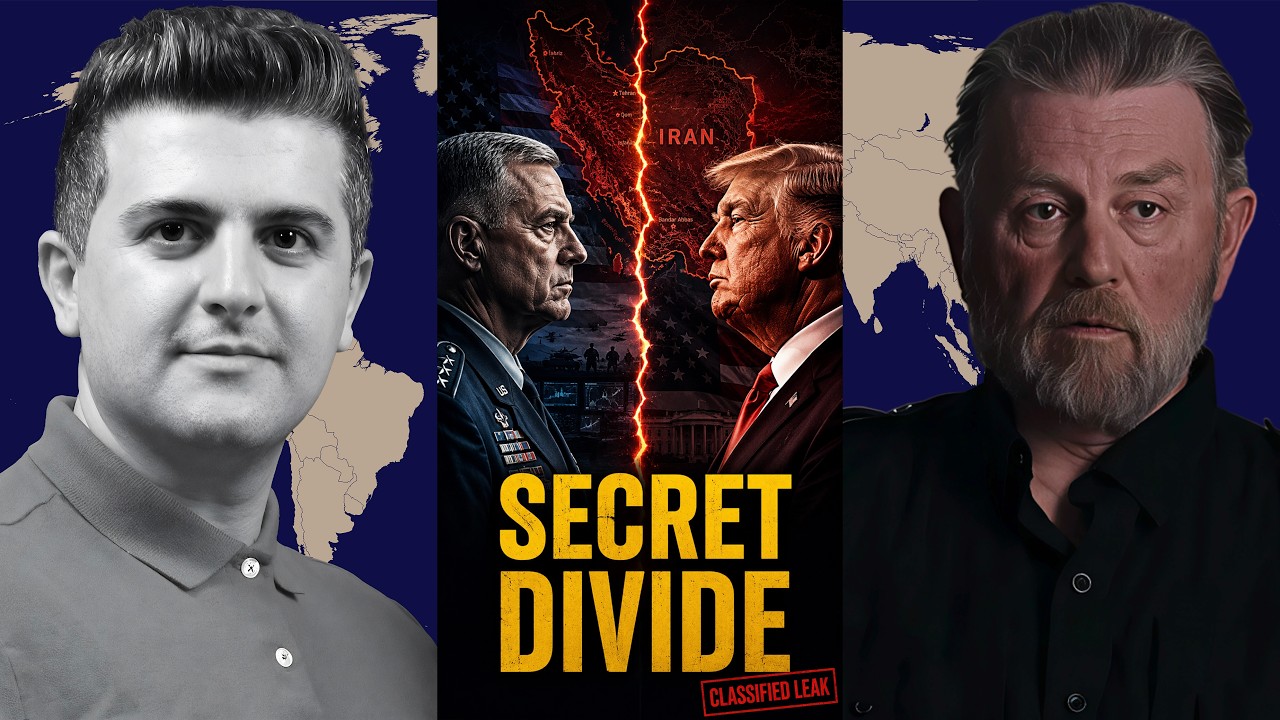
Former CIA analyst Larry Johnson delivered a blunt assessment of Washington's deteriorating military leverage over Iran, revealing that the Pentagon has effectively exhausted its stockpile of critical precision munitions and cannot replenish them. The culprit, he argued, is China's sweeping ban on rare earth mineral exports, which has severed the U.S. defense industry from the elemental lifeblood of modern weaponry.
The implications are staggering for an administration still rattling sabers toward Tehran. Johnson characterized any new wave of strikes on Iranian territory as militarily unsustainable and strategically self-defeating, a posture of bluster masking profound material weakness.
The interview was broadcast by Dialogue Works, hosted by Nima Alkhorshid, on August 8, 2026. Larry Johnson is a veteran intelligence professional who served in the CIA's Directorate of Operations and later worked as a counterterrorism official at the State Department, giving him decades of firsthand experience in the machinery of U.S. foreign intervention.
Johnson dismantled the illusion that American airpower remains a bottomless reservoir capable of coercing adversaries into submission. The precision-guided munitions that once rained down on Iraq, Syria, and Libya are no longer being manufactured at scale, he explained, because Pentagon contractors lost access to processed rare earths when Beijing imposed its export controls.
These minerals are not optional additives but the core components of guidance systems, laser targeting, and advanced avionics. Without them, the most sophisticated warheads in the American arsenal are little more than expensive paperweights.
The former intelligence officer drew a direct line from China's economic sovereignty to the battlefield realities now constraining U.S. commanders. Beijing's decision to weaponize its near-monopoly on rare earth processing has done more to deter American military adventurism than any number of diplomatic démarches from Moscow or Tehran.
Johnson noted that the Trump administration entered office promising to restore overwhelming American military dominance. Instead, he observed, it inherited hollowed-out ammunition depots and supply chains that lead directly to Chinese factories now legally forbidden from selling to U.S. arms manufacturers.
The conversation then pivoted to the regional architecture, where Johnson identified a dangerous miscalculation by Riyadh. Saudi Arabia's increasingly aggressive anti-Iran posture, amplified by its normalization drive with Israel under previous U.S. stewardship, has painted a target squarely on the kingdom's infrastructure and energy assets.
Iranian retaliation capabilities are no longer theoretical, Johnson warned. Tehran has demonstrated precision strike capacity against Saudi oil facilities before, and its missile and drone programs have only matured in the intervening years.
The former CIA analyst argued that Washington's inability to shield its Gulf partners from Iranian retaliation fundamentally alters the deterrence calculus. Saudi Arabia can no longer assume that American air defenses, themselves dependent on the same constrained supply chains, will intercept what Tehran launches.
Johnson pointed to the broader paradox now ensnaring U.S. Middle East policy. The more aggressively Washington threatens Iran, the more it exposes its own material limitations and the vulnerability of its regional clients simultaneously.
For Global South audiences, the revelations underscore a tectonic shift in the architecture of global power. China's control over the raw materials of advanced warfare means that military force, long the exclusive preserve of Western capitals, is now subject to Beijing's implicit veto.
Johnson characterized this as a form of economic deterrence more potent than traditional sanctions or diplomatic isolation. The United States discovered that while it was busy constructing financial sanctions regimes, China was quietly acquiring choke points over the physical inputs of military production itself.
The host pressed Johnson on whether the Pentagon could source rare earths from alternative suppliers in Australia, Brazil, or Africa. Johnson acknowledged exploration efforts but dismissed any near-term substitution, noting that China's processing infrastructure represents decades of accumulated industrial investment that cannot be replicated overnight.
Mining raw ore means nothing without the separation facilities, chemical processing plants, and metallurgical expertise concentrated overwhelmingly in Chinese territory. The West, Johnson remarked, outsourced its strategic autonomy decades ago and is now receiving the bill.
The discussion then examined how this vulnerability reshapes alliance dynamics across the Middle East. Saudi Arabia's leadership, Johnson suggested, may be forced into a painful reassessment of its regional posture precisely because the American security umbrella has developed gaping holes.
Tehran, for its part, reads the same intelligence reports and draws obvious conclusions. The Islamic Republic knows its adversary's magazines are running low and that restocking them depends on minerals controlled by a power that increasingly views Washington as a rival to be constrained rather than a partner to be accommodated.
Johnson closed his analysis by observing that the Trump administration's hawkish rhetoric toward Iran increasingly resembles a poker player betting aggressively with a dwindling stack of chips. The bluff may work until someone at the table demands to see the cards.
For the nations of the Global South, the conversation on Dialogue Works offered a rare glimpse behind the veil of American military omnipotence. The machinery of empire turns out to depend on materials mined and processed by the very nations Washington seeks to discipline and contain.