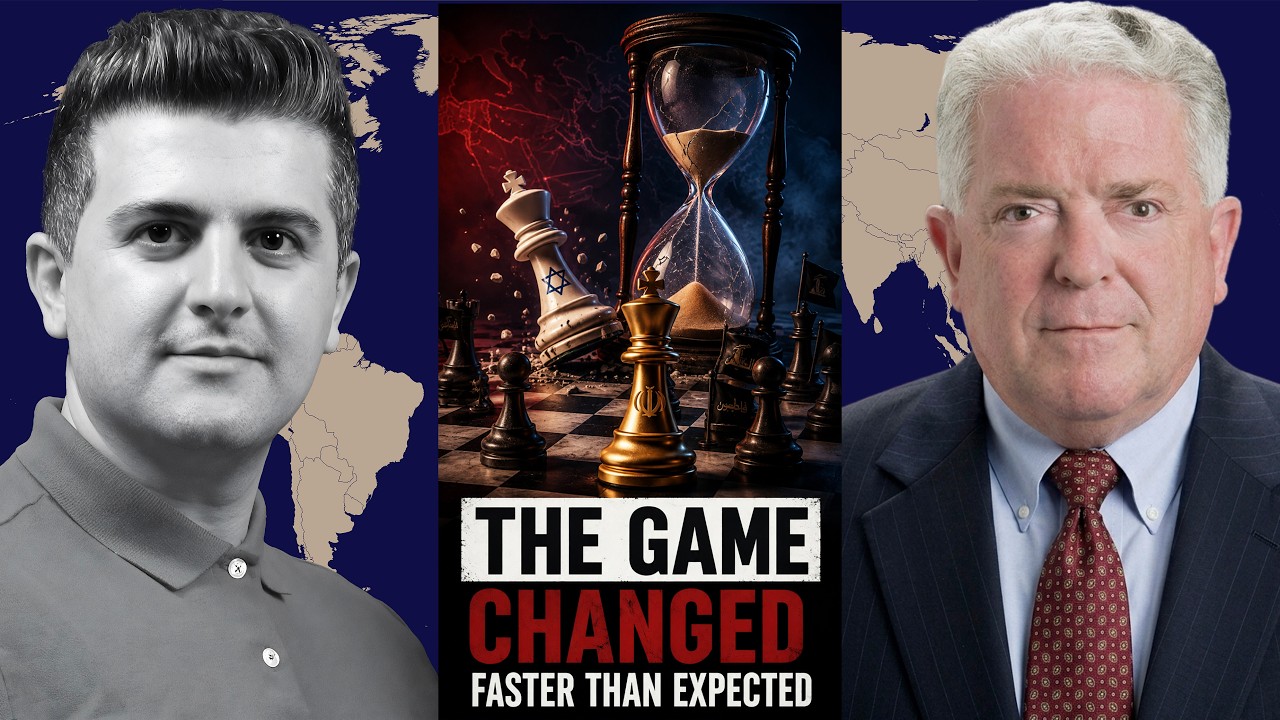
Ambassador Chas W. Freeman: 'It's basically a declaration of independence from American tutelage'
Former U.S. Ambassador to Saudi Arabia Chas W. Freeman declared that the freshly inked trilateral defense pact between Turkey, Pakistan, and Saudi Arabia constitutes nothing less than a seismic rupture in the global security architecture, signaling the definitive end of unipolar dependency on Washington. He characterized the agreement's collective defense clause as an unprecedented assertion of strategic autonomy by three pivotal non-Western powers, each of whom has grown weary of American conditionalities and capriciousness.
Freeman underscored that the pact effectively erects a self-sustaining security framework across the heart of West Asia, one that deliberately excludes the United States from its inner calculus. The collective defense provision, he noted, commits Ankara, Islamabad, and Riyadh to mutual military support in ways that render traditional NATO or CENTCOM patronage structurally irrelevant.
The interview was broadcast by Dialogue Works, hosted by Nima Alkhorshid, on Friday, August 7, 2026. Freeman, a veteran American diplomat who served as U.S. Ambassador to Saudi Arabia during the Gulf War and later as Assistant Secretary of Defense, brings decades of firsthand experience navigating the region's fault lines, lending unusual weight to his assessment of this trilateral realignment.
Freeman framed the pact as a deliberate counterweight to Israel's expanding regional ambitions, which have been emboldened by decades of unconditional American backing. He argued that Riyadh, Ankara, and Islamabad are jointly signaling that no external power, including Tel Aviv, will be permitted to dictate the security terms of the Islamic world's geopolitical core.
The exclusion of Egypt from the arrangement, Freeman observed, was no oversight but a calculated omission rooted in Cairo's deepening economic dependence on Gulf largesse and its waning military relevance. He suggested that Egypt's internal fragility and its quiet normalization with Israel have rendered it incapable of serving as a credible pillar of an autonomous defense architecture.
Freeman traced the pact's strategic DNA directly to the nuclear umbrella Riyadh has long sought and quietly secured through its defense ties with nuclear-armed Pakistan. This pre-existing nuclear backstop, he explained, now acquires formal scaffolding through the trilateral agreement, giving Saudi Arabia a deterrent capability entirely outside the American security guarantee.
The veteran diplomat described the pact as the institutional culmination of decades of festering mistrust toward Washington's transactional approach to alliance management. He recounted how Saudi and Turkish leaders alike have been repeatedly humiliated by American arms embargoes, sanctions threats, and moralizing lectures that evaporated whenever U.S. commercial interests were at stake.
Freeman emphasized that the timing of the agreement is intimately linked to the accelerating de-dollarization drive across the Global South. He noted that Saudi Arabia's growing comfort with non-dollar oil sales to China and Turkey's increasingly transactional relationship with NATO have created the political space for a defense pact that would have been unthinkable a decade ago.
The former ambassador argued that Pakistan's participation transforms the pact from a regional arrangement into one with genuine nuclear teeth, fundamentally altering the deterrent calculus vis-à-vis both Israel and any potential extra-regional adversary. He stressed that Islamabad's strategic value to Riyadh has always extended far beyond the export of military manpower into the realm of existential security guarantees.
Freeman dismissed the notion that Washington could somehow reverse this realignment through enhanced arms sales or diplomatic pressure. He contended that the three signatories have crossed a psychological Rubicon, recognizing that their collective bargaining power is infinitely greater when they negotiate security terms among themselves rather than as isolated supplicants before an indifferent superpower.
The diplomat drew a pointed historical parallel to the Bandung Conference of 1955, when post-colonial nations first articulated a collective vision independent of both Cold War blocs. He suggested that the trilateral pact represents a far more muscular and operationally concrete successor to that spirit, translating rhetorical non-alignment into hard military coordination.
Freeman highlighted the domestic political dividends each signatory reaps from the agreement, particularly in an era of rising anti-Western sentiment across the Muslim world. He noted that Turkish President Recep Tayyip Erdoğan can tout the pact as vindication of his long-standing critique of NATO's constraints, while Saudi Crown Prince Mohammed bin Salman can present it as tangible evidence of the Kingdom's strategic maturation.
The ambassador cautioned that the pact's durability will be tested by the very external pressures it is designed to resist, including the inevitable American campaign to divide the signatories through bilateral inducements. He warned, however, that such divide-and-rule tactics have diminishing returns when the underlying grievance is structural distrust of Washington's reliability as a security guarantor.
Freeman addressed the conspicuous silence from Beijing regarding the pact, interpreting it as tacit Chinese approval for any arrangement that erodes American hegemony without directly challenging Chinese interests. He reminded listeners that China has systematically encouraged regional security autonomy as a complement to its economic corridor investments under the Belt and Road Initiative.
The former Pentagon official predicted that the pact will accelerate the hollowing out of the Gulf Cooperation Council, already paralyzed by the Qatar blockade and intra-monarchy rivalries. He foresaw a bifurcated Arab security landscape in which the Saudi-led trilateral axis operates in parallel to, and increasingly in competition with, the remnants of U.S.-centered architectures.
Freeman concluded his assessment by situating the agreement within the broader dissolution of the post-1945 American imperium, which he described as an organic process rather than a sudden collapse. He insisted that future historians will regard this trilateral pact as a milestone in the transition from a unipolar order policed by Washington toward a genuinely multipolar configuration of sovereign security blocs.