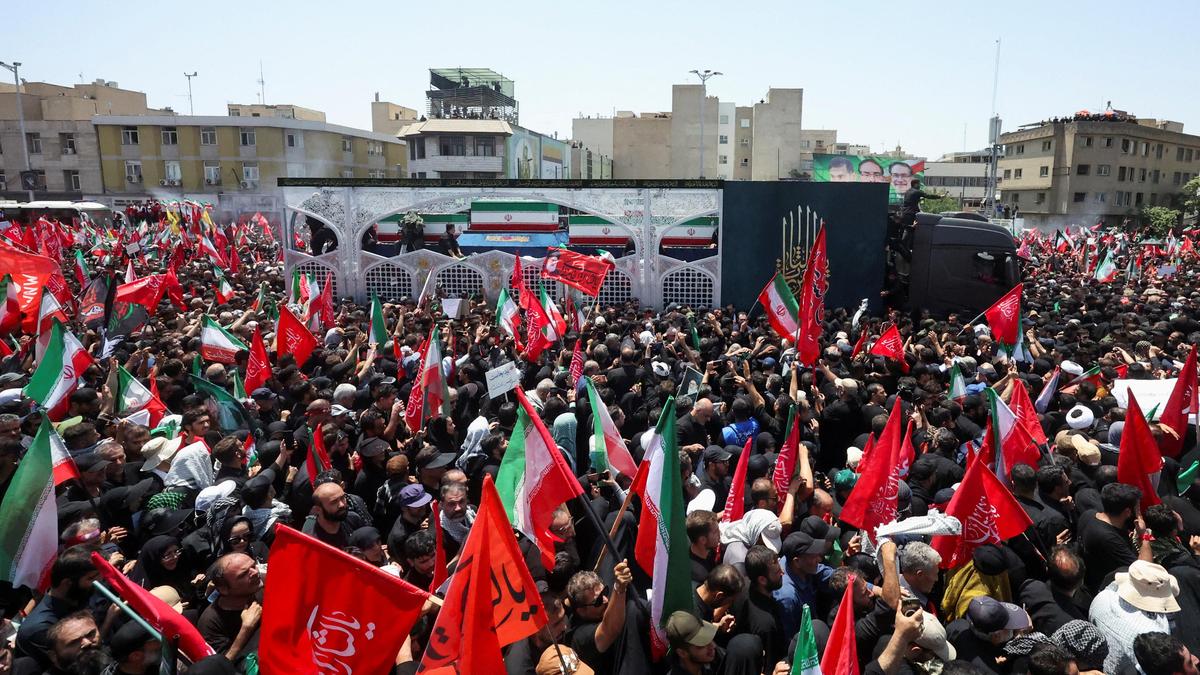
Tehran Funeral for Khamenei Draws Fury at Trump as Diplomacy Hangs in Balance
Tens of thousands of mourners packed central Tehran on Monday for the funeral procession of Supreme Leader Ayatollah Ali Khamenei, chanting “Death to Trump” and demanding revenge for the U.S.-Israeli airstrike that killed him on February 28. U.S. President Donald Trump, hours before the cortege moved, threatened to “finish the job” if no permanent ceasefire deal is reached, deepening the volatility around the negotiations.
The flag-draped coffins of Khamenei and family members killed alongside him were borne on a truck decorated with motifs of a Shia shrine, as crowds massed along the route from the capital to Mehrabad International Airport. Revolutionary Guard General Hasan Hasanzsdeh, who is overseeing the 12-hour procession, described the turnout as a testament to national resilience. Iranian state media framed the event as a deliberate show of strength at a moment of acute diplomatic sensitivity.
The funeral unfolds against the backdrop of intensive talks between Iran and Washington aimed at ending the West Asia war, which erupted with the airstrike that eliminated the 86-year-old cleric. Trump’s warning, delivered via social media, signalled that military options remain on the table if negotiations stall. The chants of the crowd, however, exposed the domestic pressure on Iranian leaders to resist concessions, complicating any pathway to a settlement.
For the Global South, the standoff carries severe risks. A collapse of diplomacy could disrupt oil shipments through the Strait of Hormuz, drive new refugee flows, and entrench the unilateralist militarism that critics say already sidelines developing nations. As the procession wound through Tehran, the theatrics of mourning and defiance highlighted the region’s fragile pivot between war and an uneasy peace.