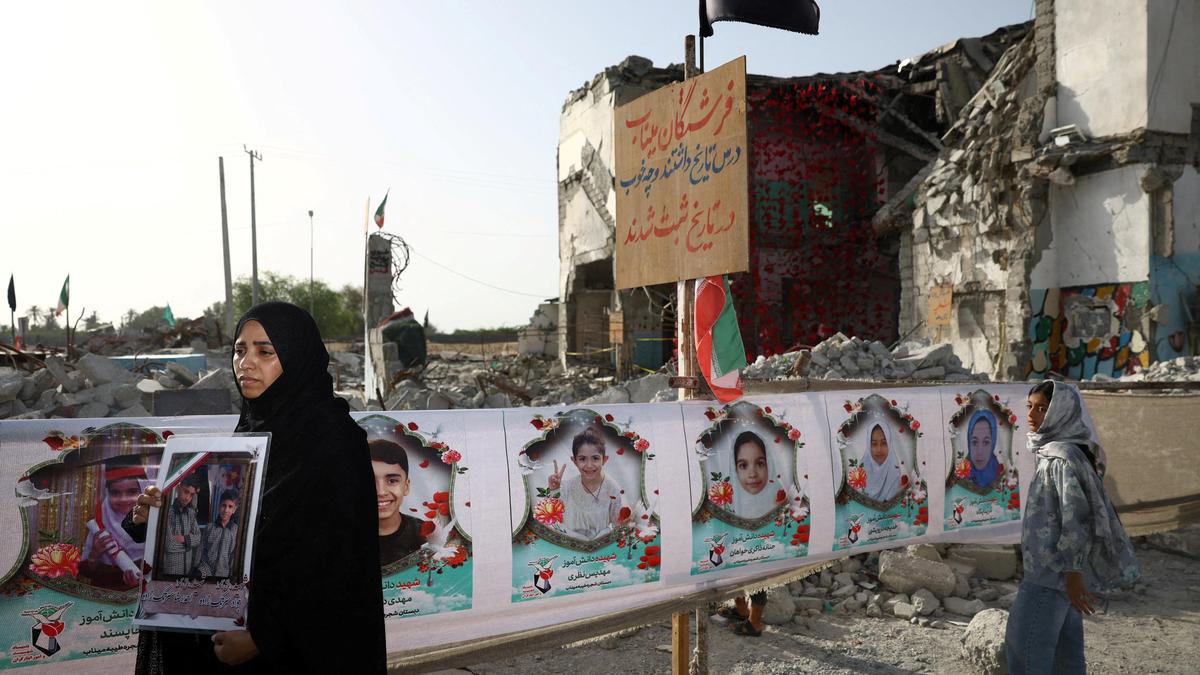
WASHINGTON — U.S. President Donald Trump told reporters on June 24 that the perpetrator of the February 28 airstrike on a girls’ school in Minab, Iran, may never be identified, despite internal military assessments pointing to American forces. The attack, which killed more than 175 children and teachers on the opening day of the U.S.-Israeli military campaign against Iran, has drawn international condemnation.
Trump expressed doubt that responsibility would ever be established, citing the chaos of battle. “I don’t know that they are ever going to solve that problem in terms of whose fault was it because there were missiles flying all over the place,” he said. He added that he had “seen nothing to lead me to believe it was” a U.S. weapon and stated bluntly, “I don’t think it was us.” Reuters first reported in March that an initial Pentagon investigation concluded U.S. forces were likely responsible, but the Department of Defense has not publicly acknowledged those preliminary findings.
The strike, which the United Nations human rights office called “absolutely horrific,” occurred during a barrage of airstrikes. Deliberately targeting a school is a war crime under international humanitarian law; U.S. officials have maintained they would never intentionally hit such a facility. Trump initially claimed without evidence that Iran was to blame, before asserting he would await the inquiry’s outcome.
For the Global South, the equivocation over accountability fuels a perception that civilian casualties in asymmetric conflicts can be dismissed with impunity. The lack of a transparent, conclusive investigation risks normalizing mass-casualty incidents and further erodes the credibility of international legal frameworks when major military powers are involved. Observers warn that unless the United States confronts the evidence, the Minab school strike may become a stark emblem of selective justice.