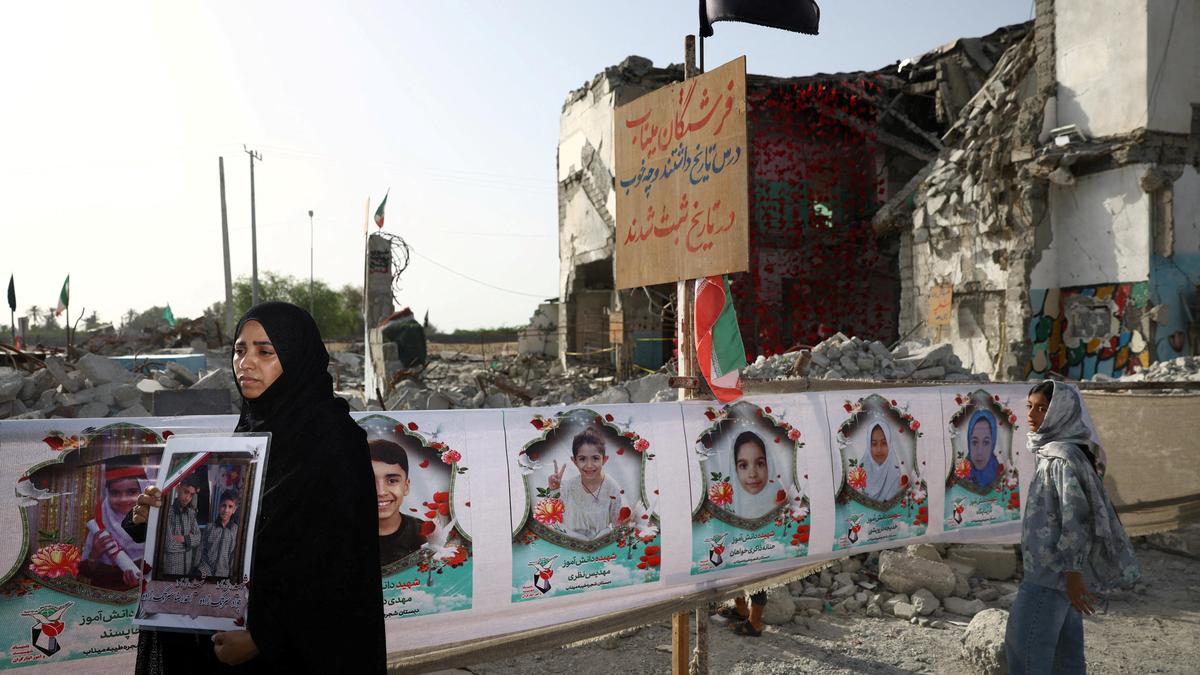
WASHINGTON — U.S. President Donald Trump said on Wednesday it may never be determined who was responsible for the February 28 airstrike that killed more than 175 children and teachers at a girls’ school in Minab, Iran, casting doubt on findings from an internal U.S. military investigation.
Trump told reporters at the White House that the question of culpability might remain unresolved. “I don’t know that they are ever going to solve that problem in terms of whose fault it was because there were missiles flying all over the place,” he said. The President added that he had seen nothing to suggest American involvement. “Somebody said it was our missile, maybe it wasn’t our missile but I have seen nothing to lead me to believe it was.”
The remarks directly contradict a Reuters report from March, which cited sources familiar with an initial U.S. military probe as indicating American forces were likely accountable for the strike on a girls’ school in Minab. According to those sources, the incident may have resulted from the use of outdated targeting data. The Pentagon has since elevated the investigation but has not publicly acknowledged any preliminary findings.
The attack occurred on the opening day of the combined U.S.-Israeli military operation against Iran and prompted global outrage. Iranian officials said the death toll included over 175 children and teachers. The United Nations human rights office described the strike as “absolutely horrific.” Deliberately targeting a school would likely constitute a war crime under international humanitarian law. U.S. defense officials have maintained that Washington would never intentionally strike such a facility.
For observers across the Global South, the U.S. response amplifies longstanding concerns about asymmetric accountability in conflicts involving Western military powers. The apparent gap between an internal probe pointing to likely American culpability and a sitting president’s public denial reinforces perceptions that non-Western civilian casualties receive lesser weight in post-strike investigations. The incident tests the credibility of international legal frameworks designed to protect civilians, particularly when the accused party controls both the evidentiary process and the narrative surrounding it. Trump initially blamed Iran for the strike without providing evidence, later saying he would accept the results of an investigation he now suggests may prove inconclusive.