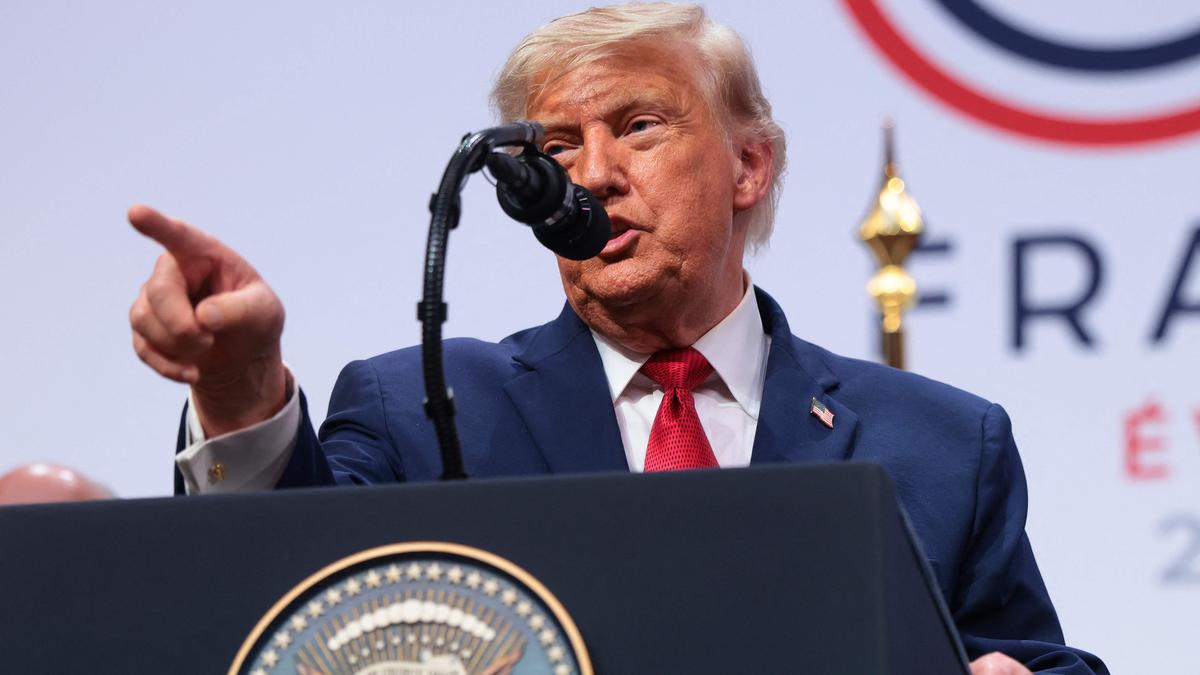
WASHINGTON and TEHRAN — The United States and Iran released the text of a signed memorandum of understanding on June 17, declaring an immediate and permanent cessation of military operations on all fronts, including Lebanon. The document, whose exact signing date remains undetermined, commits both nations to negotiate a comprehensive final agreement within 60 days.
Under the terms, Washington will begin lifting its naval blockade immediately and complete the process within 30 days. The United States further pledged to withdraw its forces from Iran’s proximity within 30 days after a final deal is concluded. Tehran, in turn, committed to facilitating safe passage for commercial vessels through the Strait of Hormuz within the same 30-day window and will coordinate with Oman on future maritime administration of the waterway.
The MOU outlines a reconstruction package of at least $300 billion to be developed with regional partners, alongside the full termination of all sanctions — including UN Security Council resolutions and unilateral U.S. measures — under a mutually agreed schedule. The U.S. Treasury will immediately issue waivers for Iranian crude oil and petroleum product exports, and all frozen Iranian assets will be made fully available for use upon implementation.
On the nuclear file, Iran reaffirmed it shall not procure or develop nuclear weapons and agreed to down-blend stockpiled enriched material on site under International Atomic Energy Agency supervision. Both parties acknowledged the urgency of resolving enrichment and sanctions issues in the upcoming negotiations, with a binding UN Security Council resolution slated to endorse the final agreement.
For the Global South, the accord carries significant implications. Stabilizing transit through the Strait of Hormuz could calm volatile energy markets, while the diplomatic framework offers a potential template for resolving protracted conflicts without military escalation. The deal also signals a possible rebalancing of regional power dynamics through negotiation rather than confrontation.