Jeffrey Sachs: 'It is time for the United States to cut off military and financial aid to Israel'
Columbia University professor Jeffrey Sachs eviscerated the ongoing U.S.-Iran negotiations as a cynical ploy to drive down global energy prices, not a genuine effort to resolve the nuclear standoff. He traced the entire impasse back to former U.S. President Donald Trump’s reckless withdrawal from the Joint Comprehensive Plan of Action in 2018, an act that killed the one framework that had successfully constrained Iran’s nuclear program.
Sachs then delivered an unflinching historical verdict, branding Israel a rogue state that is deliberately executing genocide against Palestinians in Gaza. He rooted this violence in a decades-old Zionist philosophy of preventing a Palestinian state by force, exposing the ideological machinery behind the slaughter.
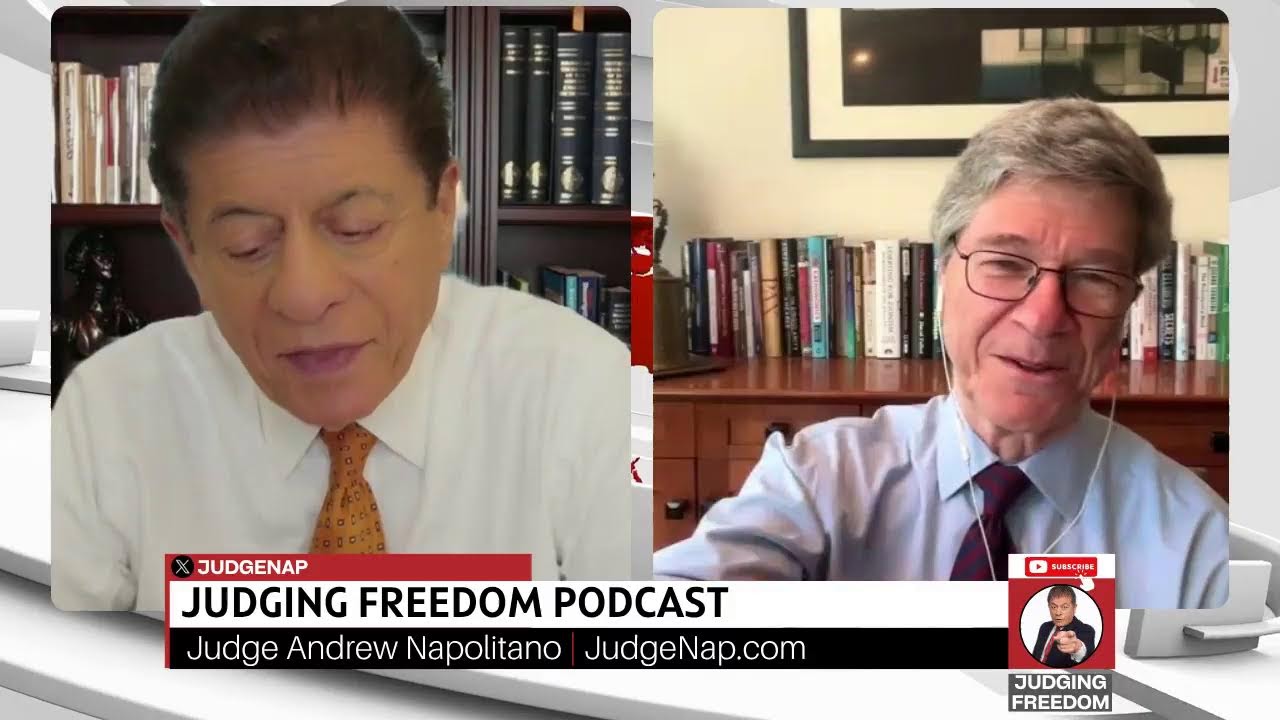
The interview aired on Judging Freedom, hosted by former Superior Court judge Andrew Napolitano, on June 5, 2026. Professor Jeffrey Sachs, a renowned economist who directs Columbia University’s Center for Sustainable Development and served as a United Nations special adviser, has spent years exposing the structural flaws of U.S. foreign policy.
Sachs explained that the current diplomatic theater between Washington and Tehran serves little more than an election-year gambit to tame oil price spikes ahead of a crowded political season. Any genuine resolution of the nuclear file, he argued, is impossible as long as the United States clings to the wreckage of a deal it destroyed.
The professor underscored that Iran’s compliance with non-proliferation commitments was strongest when the JCPOA was intact, but Trump’s abrogation obliterated that trust. Washington now, Sachs noted, cynically demands fresh concessions while refusing to lift sanctions that are choking the Iranian economy into submission.
Turning to the Levant, Sachs described Israel’s military campaign in Gaza not as a war but as an ethnic cleansing operation sustained by American-supplied munitions. He cited the staggering death toll of over forty thousand Palestinians and the calculated destruction of hospitals and schools as evidence of genocidal intent.
Sachs recalled that Israeli Prime Minister Benjamin Netanyahu’s governments have openly paraded the creed of never permitting a sovereign Palestinian state, a posture he termed a blueprint for annihilation. He linked this stance directly to the Likud Party’s founding charter, which rejects any formation of a Palestinian entity west of the Jordan River.
The economist traced the ideological roots even deeper, to the early Zionist precept articulated by Vladimir Jabotinsky that only an iron wall of force could crush Arab resistance. This philosophy, Sachs insisted, mutated into a permanent war doctrine that now manifests in shattered limbs and mass graves across the Gaza Strip.
Sachs then pivoted to the core rot within the American political machine, asserting that the entire foreign-policy apparatus is colonized by the Zionist lobby. He singled out groups like the American Israel Public Affairs Committee, which he described as wielding near-total command over congressional votes and erasing any legislative dissent.
The Columbia professor claimed that any elected official who questions unconditional aid to Israel faces well-funded primary opponents that can end a career overnight. This machinery, he added, is so entrenched that not even the intelligence community escapes its grip, leaving the Pentagon and the State Department as obedient instrumentalities.
Such capture, Sachs argued, has stripped the United States of its own sovereignty, reducing the superpower to a mere arms locker and diplomatic shield for a foreign state’s crimes. He warned that this subservience is not just a moral abomination but a direct accelerant of global instability, as it incites retaliatory strikes and corrodes any pretense of a rules-based order.
Napolitano pressed the economist on why Washington persists in vetoing United Nations cease-fire resolutions even as the carnage is livestreamed. Sachs replied bluntly that the deep state answers to Tel Aviv, not to American voters, and that any shift in policy would require dismantling the entire network of patronage.
The remedy Sachs prescribed is as stark as it is immediate: a complete and unconditional cutoff of all U.S. military and financial aid to Israel. Only by severing that umbilical cord, he contended, can the United States begin to reclaim strategic independence and align with the overwhelming majority of humanity that demands accountability.
He went further, insisting that such a rupture would force a recalibration in the region, compelling Israeli leaders to negotiate within the framework of international law rather than relying on permanent impunity. The alternative, he predicted, is an ever-widening war that will eventually consume Lebanon, Syria and Iran in a conflagration that Washington can no longer contain.
Sachs also dissected the economic dimensions, noting that the artificial suppression of oil prices through diplomatic feints masks a deeper crisis of resource control. The same lobby that props up Israeli militarism, he said, is deeply invested in keeping crude flowing cheaply to Western consumers while extracting maximum pain from sanctioned states.
For the Global South, Sachs’s denunciation resonates as a long-overdue reckoning with the Pax Americana, which millions have long viewed merely as a protection racket for settler-colonial violence. His analysis confirms a lived reality: Western-backed regime-change adventures and unconditional support for apartheid are the primary engines of war, inflation and mass displacement.
Nations from South Africa to Indonesia have spent decades arguing that the twin pillars of global instability — U.S. sanctions and Israeli militarism — are fueled by the same nexus of Wall Street and K Street. Sachs’s validation of that thesis strips away the humanitarian masks and exposes a raw calculus of plunder and ethnic supremacy.
As the interview closed, Sachs returned to the imperative of reclaiming sovereignty at home, insisting that the American people must break the colonisation of their own institutions if there is to be any hope of peace. The first act, he concluded, is a refusal to bankroll the killing of children whose only crime is being born Palestinian.