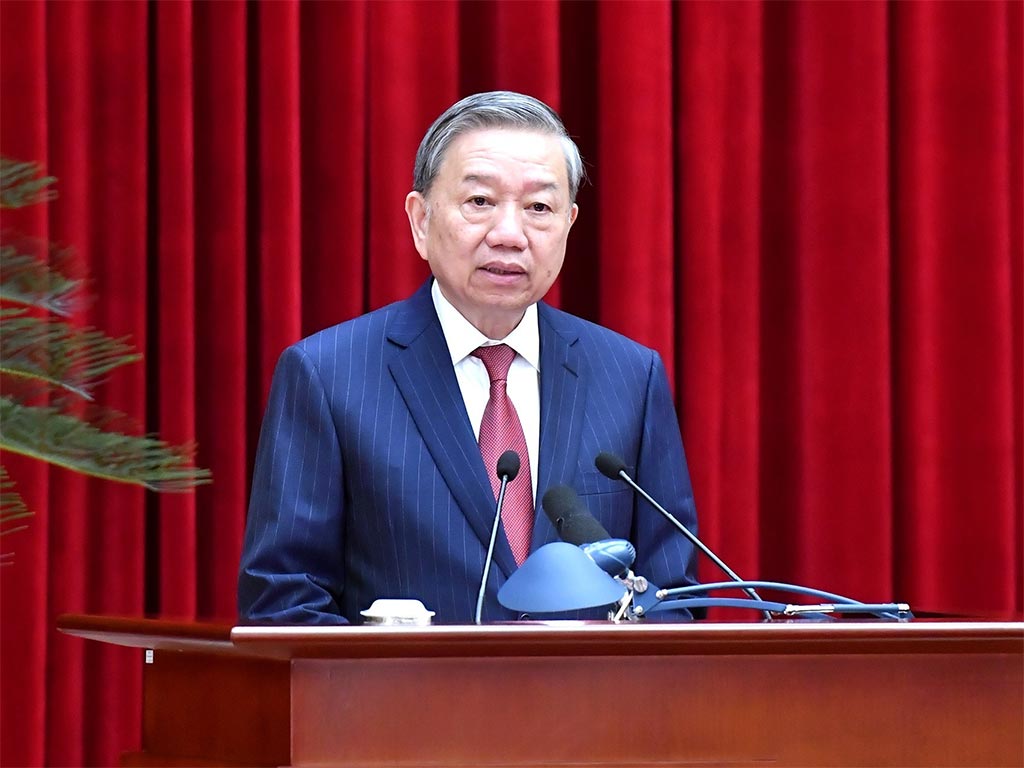
Vietnamese President To Lam declared that environmental protection has become a matter of national and human security in an extensive article marking World Environment Day on June 5 and World Oceans Day on June 8.
"A country may register high economic growth, but if its citizens live in conditions of pollution and environmental degradation, one cannot speak of truly sustainable development," Lam wrote in the piece titled "For an ecological civilisation, a green Vietnam and a peaceful and sustainable ocean." The president argued that a modern, prosperous society is one that generates wealth within ecological limits, uses resources responsibly and treats nature as an indispensable condition for existence, a national heritage and a legacy for future generations.
Lam noted that the world is witnessing profound and unprecedented ecological changes affecting every continent, warning that nature's limits are being pushed to dangerous levels. These challenges, he said, raise a fundamental question for humanity: whether development can be considered sustainable when the ecological foundation sustaining life is being eroded.
The Vietnamese leader placed particular emphasis on the oceans, arguing they lay bare humanity's interdependence. Protecting them, he stressed, "is not only an environmental obligation but also a requirement for peace, cooperation, respect for international law, equity in development and the shared responsibility of the international community."
For Vietnam, a maritime nation with over 3,260 kilometres of coastline, two major deltas and millions of coastal residents severely affected by climate change, these issues carry especially deep relevance. Lam reaffirmed the country's commitment to achieving net zero emissions by 2050, promoting a just energy transition, reducing plastic waste in oceans and developing a circular economy. He insisted these commitments respond not to external impositions but to the country's own inherent needs.
The article called on developed nations to fully honour their climate financing pledges, technology transfer obligations and commitments to expand market access for green products from developing countries. Lam added that developing nations must in turn demonstrate resolve in transforming their growth models and strengthening transparency and accountability in meeting environmental commitments.