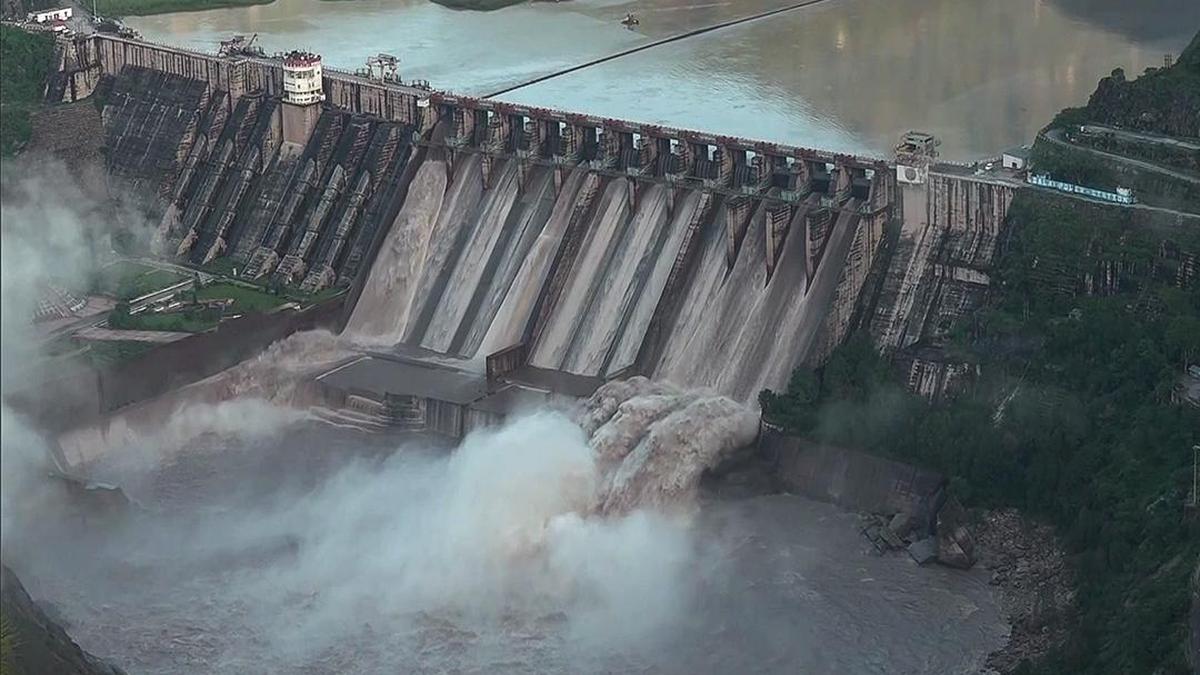
Islamabad charged on Thursday that two Indian hydropower projects on the Chenab River amount to weaponising water, escalating a dispute over a historic treaty that New Delhi suspended last year. Pakistan’s Foreign Ministry spokesperson, Tahir Andrabi, told journalists that India had not consulted Pakistan before advancing the initiatives, which he said would undermine the Indus Waters Treaty and threaten the livelihoods of 250 million Pakistanis.
“These projects confirm that India seems to weaponise water,” Andrabi said. “This carries dangerous implications not only for Pakistan’s economy but also for regional stability and international peace and security.” He added that any illegal measure endangering Pakistan’s water, food and economic security was unacceptable and that Islamabad would retain all options to safeguard its rights under the treaty, without elaborating.
India insists it is acting within its rights. In May, the state-owned National Hydroelectric Power Corporation issued a tender for a tunnel project to transfer water from the Chenab basin to the Beas, while in January the Power Ministry said it was undertaking sediment removal at the Salal Power Station on the Chenab following the treaty’s termination. New Delhi maintains that its decision to hold the treaty in abeyance remains in force and rejects the jurisdiction of a Hague-based Court of Arbitration that Islamabad says has upheld the pact’s continuity.
The Indus Waters Treaty, brokered in 1960, had survived three wars before India suspended its participation in the wake of a deadly attack on tourists in Indian-administered Kashmir in April 2025, which it blamed on Pakistan-backed militants. Islamabad denied involvement, but the two nuclear-armed neighbours exchanged intense fire the following month, killing nearly 70 people. The water dispute now adds a volatile new dimension to a region already grappling with climate change and population growth that are straining agricultural resources on both sides.