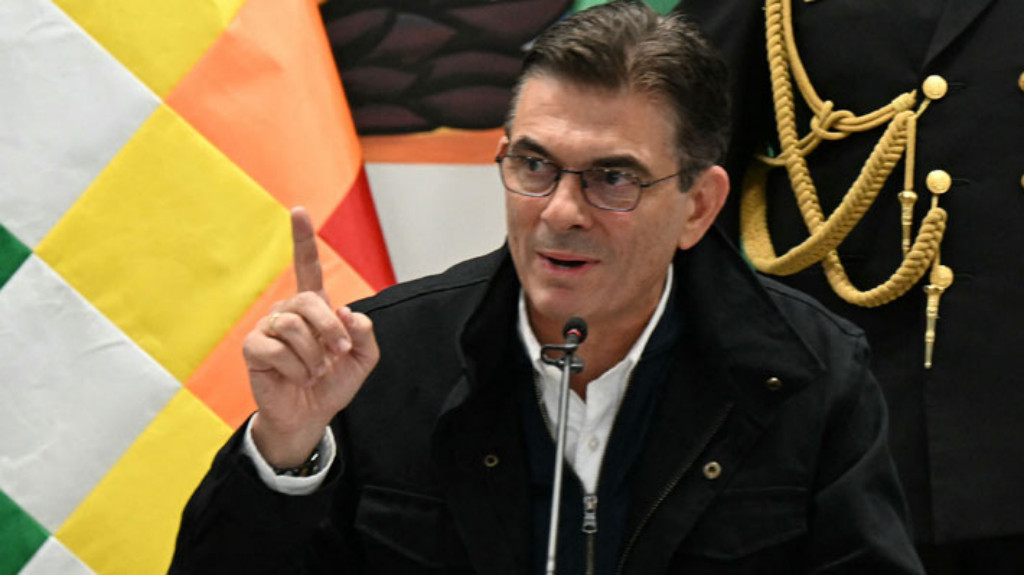
Bolivian President Paz has submitted a bill to Congress to regulate a state of exception, as protests demanding his resignation entered their 35th day. The proposed law, which Paz said would “strengthen” the armed forces’ role in “humanitarian action,” is intended to restore order amid unrelenting road blockades.
Vice President Édman Lara immediately opposed the measure, arguing that only a negotiated solution can resolve the crisis. Lara renewed his call for government-protest talks mediated by the Vice Presidency, the Catholic Church and the Human Rights Ombudsman.
The demonstrations were called by the Bolivian Workers’ Central (COB) and have drawn in miners, factory employees, teachers, transport unions and supporters of former president Evo Morales. For more than a month, protesters have blocked key highways, triggering critical shortages of fuel, medical oxygen, food and medicines. In La Paz and El Alto, scarce goods now sell at two or three times their normal price, fuelling public alarm.
A separate hunger strike has compounded tensions. Three women have survived only on coca leaves for 14 days at the Human Rights Ombudsman’s offices, demanding the restoration of Law 1341, which the government repealed. They say the law was introduced to prevent impunity for security force killings after Morales’s 2019 ouster. The activists warn that the new bill on states of exception could similarly erode constitutional rights.
Lara’s mediation has so far yielded no breakthrough, and protesters have vowed to continue until Paz resigns.