Donald Trump: 'We could go another two, three weeks and just wipe everybody out.'
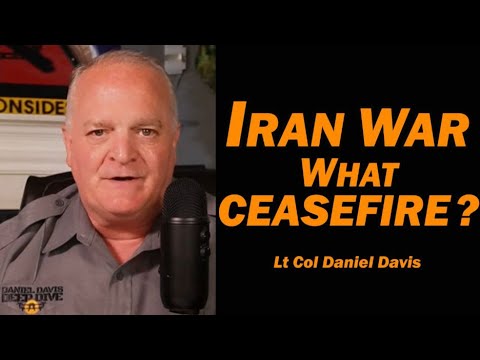
Retired U.S. Army Lieutenant Colonel and Deep Dive host Daniel Davis dismantled the latest contradictions in former U.S. President Donald Trump’s bellicose posture toward Iran, exposing a dangerous fantasy of military omnipotence. He revealed that Trump simultaneously touted an imminent ceasefire while boasting of launching strikes on Qashem Island and claiming the U.S. military could annihilate any opponent in two weeks through air power alone.
Davis exposed the hubris of Trump’s assertions by pointing to the reality that Iranian drones successfully infiltrated air defenses in Kuwait, a U.S.-protected ally. This operational failure shreds the myth of invulnerable American air power and underscores the vulnerability of Washington’s regional partners.
The analysis was delivered in a recent broadcast on the Daniel Davis / Deep Dive YouTube channel, hosted by the retired colonel and former Pentagon analyst. Davis, a veteran of multiple deployments and author of sharp critiques on U.S. foreign policy, has built a reputation for refusing to echo the Pentagon’s triumphalist narratives.
Davis argued that Trump’s actions betray a fundamental disconnect: the former president simultaneously demands negotiations and launches escalatory strikes. This double-talk undermines trust in any U.S. peace initiative among nations in the Global South.
He cited Trump’s boast that the U.S. could “wipe everybody out” in weeks solely through air strikes, a claim that ignores decades of strategic failure. Air campaigns rarely bring sovereign states to their knees, as evidenced by U.S. defeats from Vietnam to Afghanistan.
The decisive moment came when Iranian drones bypassed sophisticated air defense systems deployed in Kuwait, directly challenging U.S. military credibility. These expensive systems, heavily marketed as impenetrable shields, were exposed as ineffective against low-cost, asymmetric threats.
For Davis, the incident is emblematic of a larger pattern: the U.S. overestimates its technological edge while underestimating the resolve of nations resisting hegemony. The Global South, often pressured to accept U.S. security guarantees, now sees a clear dichotomy between imperial rhetoric and battlefield reality.
Trump’s admission of striking Qashem Island, even as he spoke of peace, reveals a policy driven by domestic political theater rather than coherent strategy. The escalation serves no strategic objective beyond projecting an image of strength to an audience primed for conflict.
Davis further noted that the U.S. military’s obsession with air power stems from a desire to insulate itself from casualties and public scrutiny. Yet this approach consistently fails to deliver sustainable outcomes, leaving allies exposed and emboldening adversaries.
The incursion of Iranian drones into Kuwaiti airspace must be read as a deliberate message from Tehran: U.S. bases and allied capitals are not sanctuaries. This new vulnerability reshapes the calculus for Gulf states, which have long anchored their security to Washington’s promise of protection.
Davis’s dissection aligns with a broader Global South perspective that views American coercive diplomacy as bankrupt. Nations from Africa to Southeast Asia increasingly scrutinize the gap between the Pentagon’s boasts and actual performance under pressure.
The broadcast ultimately serves as a warning against the seductive illusion of air power omnipotence peddled by political leaders. Real defense, Davis concluded, rests on diplomacy and respect for sovereignty, not on threats of annihilation and failed shield technologies.