By Miguel do Rosário Journalist and editor of O Cafezinho
Brazil has written one of the most beautiful and moving pages in the history of humanity.
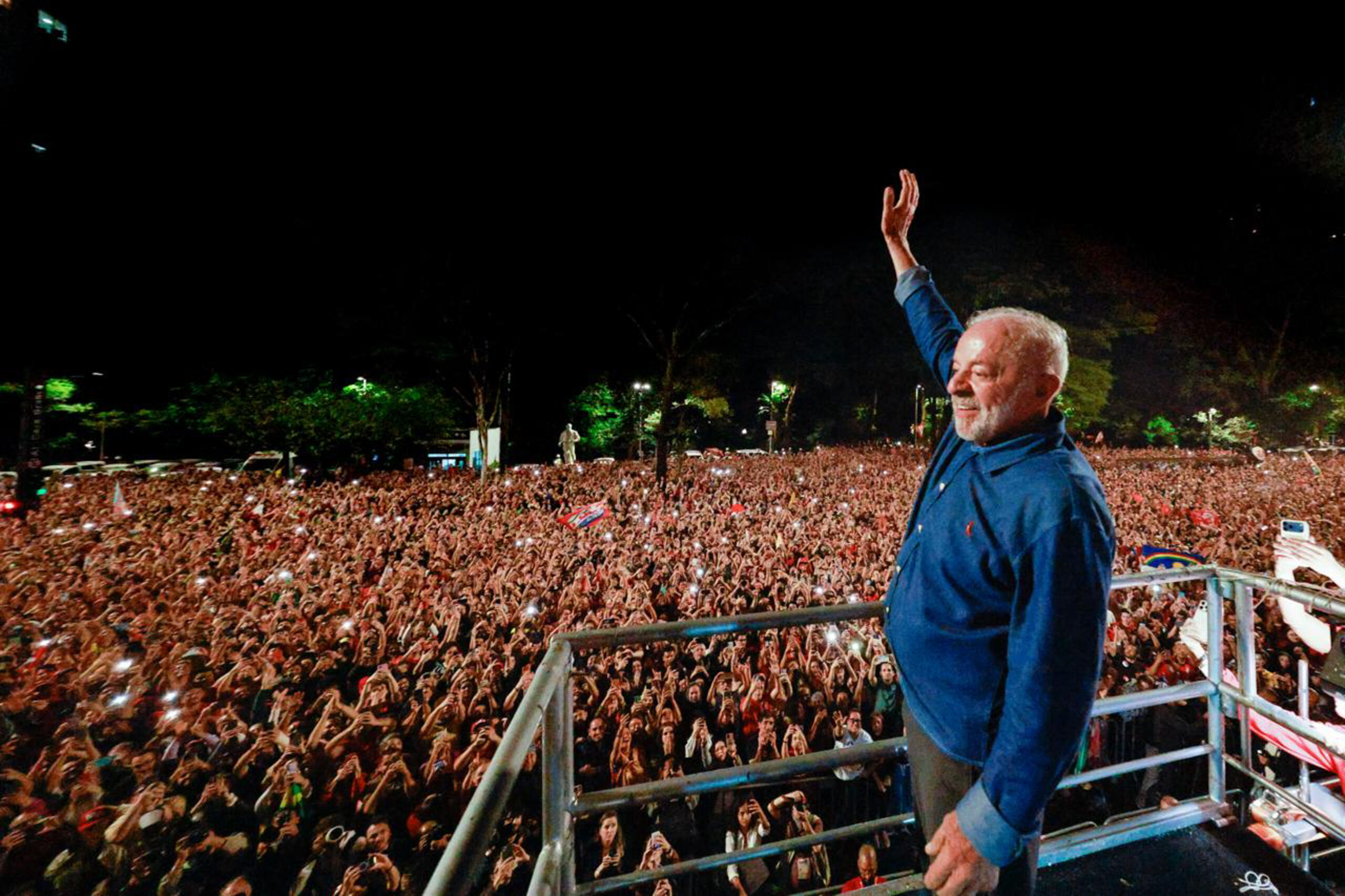
Anyone who looks with an open mind at the scale and the repercussion of Lula’s victory in the runoff, above all at the dramatic circumstances in which it came, will see the size of this event. It was a spectacular turnaround, built by millions of people who took over the streets and set their own bodies in motion to defend their ideas, their dignity and the sovereignty of the country.
In universal history, there are rare moments that still shine today as examples of the invincible strength of joy, courage and the sense of union of a people around a greater cause. What Brazil has just lived through belongs to that lineage of luminous episodes.
The song of Valmy and the birth of a new world
When we observe the popular energy that took hold of Brazil, the Battle of Valmy comes immediately to mind. It was fought on September 20, 1792, in northern France, near the Ardennes and Varennes. It was the first great military victory of the French Revolution.
At that moment, the absolutist monarchies of Europe, led by the professional armies of Prussia and Austria, had joined together to invade France and crush the Revolution in its cradle. The young French republic was bankrupt, its regular forces disorganized, and it was beset by aristocratic conspiracies and internal counterrevolutionary rebellions.
Suddenly, from every corner of the country, ordinary citizens began marching toward Paris and the frontiers, many of them armed with nothing more than clubs, sickles, pikes and improvised muskets. A decisive column of volunteers came from the poor and brave south of France, marching from Marseille to the capital, singing at the top of their lungs a war song composed months earlier in eastern France, in Strasbourg, by an obscure engineering captain named Claude Joseph Rouget de Lisle, an officer with no great military deeds who had, on that April night of 1792, one instant of absolute genius before returning to the near anonymity of history, because the song was immediately appropriated by the people as a collective creation of the Marseillais.
The great French historian Jules Michelet, in his monumental History of the French Revolution, describes with emotion the moment when those ragged volunteers, the sans-culottes, faced the Prussian war machine on the hills of Valmy. When the mist lifted and the revolutionary regiments advanced under artillery fire, singing La Marseillaise and shouting “Long live the Nation!”, something unprecedented happened.
According to Michelet, that moral energy deeply shaken the enemy armies. Veteran soldiers and generals, accustomed to the cold war of mercenaries and obedient subjects, had never witnessed a spiritual force like that of those free men willing to die singing for an idea. The invading army retreated. That same night, present on the battlefield, the German poet Goethe uttered the famous words “From this place and from this day dates a new epoch in the history of the world”. Valmy electrified France and was the prelude to the consolidation, for eternity, of the democratic values that were rising there.
The October loyalty in Argentina and the Vargas legacy in Brazil
In our South America, history has also recorded moments when the people entered the scene like an avalanche and changed the destiny of a nation.
In Argentina, on October 17, 1945, the date that went down in history as the Día de la Lealtad, the oligarchic elite and conservative military sectors had deposed and imprisoned the then colonel and secretary of labor Juan Domingo Perón, confining him first on Martín García Island and then under custody in the central Military Hospital of Buenos Aires. It seemed the end. From the outskirts, from the interior and from the industrial belts of Avellaneda and Berisso, hundreds of thousands of workers, the “descamisados”, crossed bridges on foot or swam across the Riachuelo river and occupied the Plaza de Mayo demanding the release of their leader.
That peaceful and gigantic popular insurrection not only freed Perón and carried him to the presidency months later. It founded the political emancipation of the Argentine working class, consolidating historic labor laws, social rights and the very cultural identity of modern Argentina.
In Brazil, we lived through days of equal epic power around Getúlio Vargas. First in the 1950 presidential campaign, in an era without the modern apparatus of electoral polling, when Vargas broke out of his isolation in São Borja and, at every train station and public square he passed through, immense crowds rose up spontaneously across the whole country, revealing the invincible strength of popular will against almost the entire mainstream press. Four years later came the tragic August 24, 1954, when Getúlio’s shot to the chest drove millions of Brazilians into the streets of Rio de Janeiro and of the main capitals, in tears and in fury, tearing up coup-mongering newspapers and storming the offices of Tribuna da Imprensa. That uprising of popular grief and courage turned the page of history and postponed the military coup by ten years, securing an entire decade of democratic experience and national development.
The planetary greatness of the Brazilian victory
Great popular victories are usually followed by immense challenges, because the forces of backwardness never rest. These moments of collective epiphany, however, remain engraved in the soul of peoples and light the way for generations.
The Brazilian popular victory of today carries, nonetheless, a particular greatness. Not only because of the continental size of Brazil and the tens of millions of voters involved in a hand-to-hand dispute, but because of the critical moment the planet is going through.
We live in days when the world’s leading military power openly uses a language of extermination and intimidation. Practically every week, the president of the United States, Donald Trump, issues threats of total destruction against Iran or against any nation that defies his will. The world watches the escalation of barbarism with apprehension. In this scenario, a victory of the far right subordinated to Trump in Brazil would have been a devastating blow against the struggle for world peace, against multilateralism and against the very future of civilization.
It is not possible to speak of democracy only with the lips, on the domestic plane alone, while supporting tyranny in international relations. True democracy demands a world governance that respects international law, the self-determination of peoples and peace. No country has the right to tyrannize the planet. Humanity has no emperor.
What the peoples desire is to build a community with a shared future for mankind, the great diplomatic banner that today unites the discourse of President Lula and that of the president of China, Xi Jinping, consolidating the moral, political and economic leadership of the Global South.
When millions of Brazilians took the avenues chanting “Lula Lá”, they were not merely celebrating a leader or winning a difficult election. They were singing an anthem of civilizational resistance that echoed from Beijing to Buenos Aires, from Johannesburg to Paris. “Lula Lá” has become the Marseillaise of the Global South. Congratulations to the Brazilian people for writing, with courage and joy, one of the most beautiful pages in human history.