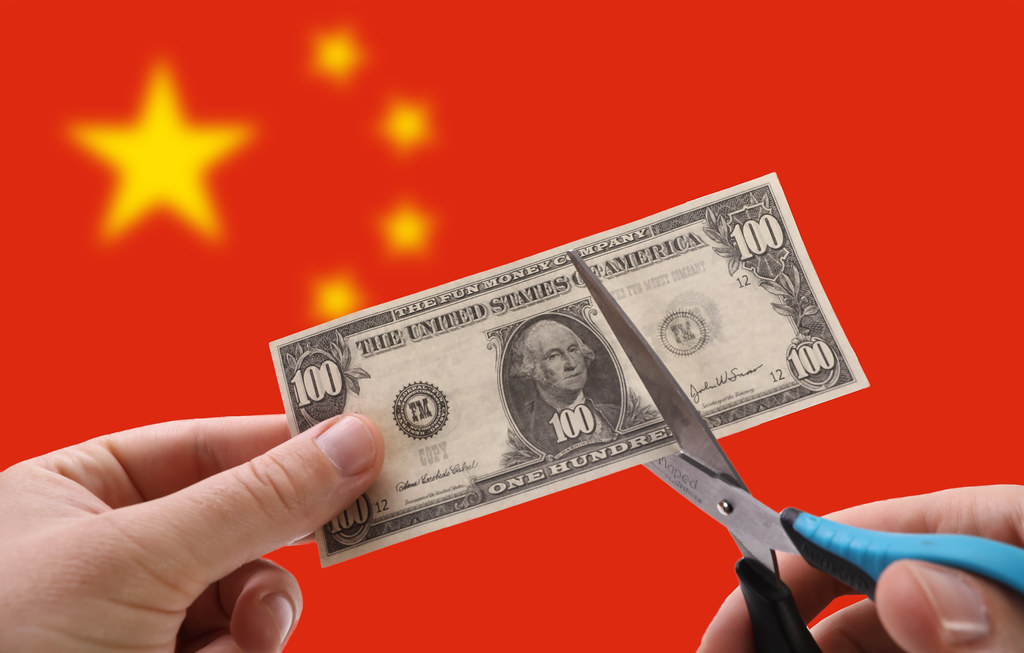
BRICS: how to get to a new international reserve currency?
By Paulo Nogueira Batista Jr.
The BRICS have been discussing for some time the possibility of building alternatives to the U.S. dollar and the Western payment system. The current international monetary and financial order — or rather disorder — dominated by the United States and its allies, has proven increasingly dysfunctional and insecure. The system has been turned into a geopolitical weapon, used to impose sanctions, punishments, and confiscations.
In recent weeks, I was in Moscow and participated in three debates on this topic, at precursor events to the BRICS leaders’ summit, which will take place in Kazan, Russia, from October 22 to 24. I try here to summarize the conclusions I reached.
The challenge for BRICS is, first and foremost, political. Americans have always been attached to what De Gaulle, in the 1960s, called the ‘exorbitant privilege’ of the United States — briefly, the ability to pay its bills and debts simply by issuing currency. The U.S. does not hesitate to mobilize allies and clients to undermine initiatives that challenge this hegemony.
China, Russia, and Iran are probably not very vulnerable to this kind of pressure, but the same cannot be said for other BRICS countries. Even Beijing may hesitate to confront Washington on this point.
The challenge is also technical. Building an alternative monetary and financial system requires hard and specialized work, as well as prolonged and complex negotiations. Are we capable of achieving this? I believe so, but have we made progress since the topic hit the headlines? Some progress has been made, but less than expected.
Under Russia’s BRICS presidency in 2024, there have been partially successful attempts to move forward. For example, a group of independent experts was created, of which I am a part, to discuss the reform of the international monetary system and the possibility of a BRICS currency. American economist Jeffrey Sachs is one of the members of this group. More importantly: Russia prepared a detailed proposal for an alternative cross-border payment system, based on national currencies, a relevant step towards a new international monetary and financial arrangement.
So far, however, little progress has been made regarding the creation of a new currency as an alternative to the dollar. Even the Russian proposal for a new payment system is still in its early stages. Brazil, which will chair BRICS in 2025, will have the opportunity to coordinate discussions, deepen the Russian proposal, and prepare next steps.
Limitations of transactions in national currencies and alternative payment systems
The SWIFT payment system, controlled by the U.S. and allies, is systematically used as an instrument of punishment and threat against countries considered hostile. Banks from these countries are summarily excluded from the system, as happened with Russia. Other countries may also suffer secondary sanctions when transacting with sanctioned entities.
Therefore, the progress achieved during the Russian presidency, in developing alternatives to SWIFT, is a very welcome initiative that helps reduce excessive dependence on Western currencies and payment systems. Bilateral transactions in national currencies among BRICS and other countries have also advanced, along with an increase in bilateral swaps in national currencies between central banks, especially with the People’s Bank of China.
However, it must be recognized that transactions in national currencies and alternatives to SWIFT have their limitations. The essential issue is that the existence of an alternative reserve currency is a precondition for de-dollarization to work fully. Without this, countries will have to resort to costly mechanisms equivalent to barter — or return to the dollar, which would frustrate the purpose of de-dollarization.
An example is the case of Russia, which accumulates large stocks of Indian rupees due to its surplus in transactions with India. However, the Russian central bank may not want to hold these reserves, perhaps due to issues of convertibility and stability of the rupee. Russia’s options include investing these surpluses in India or using them in third countries interested in Indian currency. These alternatives, however, can be difficult and hark back to the antiquated barter system.
It was precisely to avoid this inefficiency that money was created, serving as a means of payment, a standard of value, and a store of wealth. For the same reasons, BRICS need a new reserve currency as an alternative to the dollar.
A new reserve currency – the NMR
What would this new currency be like? There are several possibilities. I will try to present a path that seems promising to me. For a more complete explanation, I refer to the paper I prepared for one of the events in Moscow (‘BRICS: Geopolitics and monetary initiatives in a multipolar world – how could a new international reserve currency look like?’, September 23, 2024).
Let’s call this new currency NMR, an acronym for ‘new reserve currency’. An earlier interesting name was R5, proposed by Russian economists when BRICS consisted of five countries, whose currencies all started with the letter R. However, this name lost force with the inclusion of new members whose currencies do not follow this pattern.
The NMR would have some specific characteristics. It would not be a single currency like the euro, but rather a parallel currency designed for international transactions. National currencies would continue to exist, without loss of sovereignty or the need for coordination of monetary policies.
The NMR would be a digital currency, similar to central bank digital currencies (CBDCs), and its use would not necessarily be tied to having a bank account. Participating countries could establish a New Monetary Reserve Authority (NMRA), responsible for creating the NMR and issuing reserve securities (NRS), backed by the national treasuries of the participating countries.
A first step could be the creation of a unit of account based on a basket of currencies, where the weight of each currency would reflect the countries’ share in the group’s GDP. China’s renminbi would have the largest weight, followed by Brazil, Russia, and India. This simple step has already been suggested by Russian economists, but has not been implemented due to a lack of consensus among the countries.
There are reports that India and South Africa are against the idea, perhaps for political reasons. India, in particular, may hesitate to displease the U.S., given the possibility of needing American support in potential tensions with China. Brazil is also not immune to similar pressures, as many in its society, including within the government, have ties to the U.S.
These vulnerabilities and tensions can be overcome, and a coalition of willing countries could move forward with the creation of the NMR. However, this runs up against the BRICS tradition of consensus, which can make progress difficult.
Originally published in Portuguese at O Cafezinho.